![Fix Your Cold Oven: 4 Broil Element Diagnostic Tests [2026]](https://appliancebargainz.com/wp-content/uploads/2026/03/Fix-Your-Cold-Oven-4-Broil-Element-Diagnostic-Tests-2026.jpeg)
Ever stood in front of your cold oven, ready to bake or roast, only to discover it isn’t heating up? That frustrating moment when your meal is delayed because your appliance decided to take a break without warning. I remember the first time it happened to me—my dinner was almost ruined, and I felt completely helpless. It was a lightbulb moment that made me realize how critical it is to understand the inner workings of our kitchen appliances.
If you’re like me, chances are you’ve faced this problem at least once. A non-heating oven can be a real headache, especially when you’re pressed for time or hosting friends and family. But here’s the thing: troubleshooting doesn’t have to involve calling in expensive repairs or throwing away your trusted oven. With a few simple diagnostic tests, you can pinpoint the issue and potentially fix it yourself.
Today, we’re going to dive into the essential diagnostic tests for your oven’s broil element. This component is often the culprit when your oven refuses to heat properly, especially for broiling tasks. By understanding how to check the broil element, you can save money and avoid unnecessary replacements. And if you’re unsure about any step, I’ll include links to detailed guides for specific issues.
Before we get started, I want to mention that a common mistake early in my repair journey was jumping straight to replacing parts without proper testing. That caused me to spend more money and time than necessary. According to appliance repair experts, correctly diagnosing the problem is the key to efficient fixes. In fact, the right diagnostic approach can reduce repair times by over 50%, according to industry statistics.
Are you ready to empower yourself with some simple but effective diagnostic skills? Let’s demystify your oven’s mysterious cold spells and get it working like new. We’ll cover the four core tests you should perform before calling in a professional, ensuring you’re making informed repair decisions. So, if you’ve ever wondered whether your broil element is the root of your oven’s problems, stick around—this guide is just what you need.
Turn Off Power and Access the Element
Before starting any tests, switch off your oven’s circuit breaker to prevent electrical shocks. Open the oven door and remove the racks to reach the broil element, usually located at the top inside the oven. Use a screwdriver to detach the mounting screws and carefully pull the element forward.
Visually Inspect for Damage
Check the element for obvious signs of damage such as breaks, burns, or blisters. A damaged element often looks cracked or has blackened spots. If you spot these, replacing the element might be necessary. However, perform an electrical test before buying a new part to confirm the fault.
Perform the Continuity Test
Use a multimeter set to the ohmmeter (Ω) setting. Connect the probes to the terminals of the broil element. A healthy element typically shows a resistance between 10-30 ohms. If the meter reads zero (short circuit) or infinite resistance (open circuit), the element is faulty. I once tested mine and found an open circuit, which explained why the oven wouldn’t heat during broil. Replacing the element restored functionality.
Check the Wiring and Connectors
Examine the wiring and connectors attaching to the element for corrosion, burns, or loose connections. A loose or corroded connector can mimic a broken element. Clean the contacts with a wire brush and re-tighten the screws to ensure a solid connection. I once discovered a loose connector that caused intermittent heating during tests.
Test the Safety Switches and Relays
If the element tests fine, the issue might lie with internal switches or relays. Locate the oven’s control board and identify the relay controlling the broil element. Use your multimeter to check if the relay switches correctly when the oven commands broiling. A faulty relay will need replacement. Ensure all diagnostics are done with the power off to prevent damage or injury. You can learn more about diagnosing control board issues here.
Consult a Professional if Needed
If all tests pass but your oven still doesn’t heat during broiling, the problem might be with the oven’s thermostat or sensor. For a quick fix, check out this guide. Remember, diagnosing electrical components requires caution; if you’re unsure, call a professional to avoid safety risks.
When it comes to home appliance repair, many enthusiasts and even seasoned DIYers often fall into common traps by oversimplifying problems or relying solely on basic diagnostics. Instead of trusting intuitive assumptions, understanding these nuanced details can dramatically improve your troubleshooting accuracy and save you money.
A prevalent myth is that replacing faulty parts like heating elements or sensors automatically fixes the problem. While part replacement might be necessary, without thorough diagnostics, you risk replacing components unnecessarily or overlooking the real culprit. For example, a dishwasher’s spray arm clogged with debris can diminish pressure, mimicking a pump failure. Checking the spray arm pressure is an overlooked step that can save you from costly replacements. For more insights, see how to restore pressure in your dishwasher’s spray arm here.
Another misconception is that a quick visual inspection is enough to diagnose electrical issues. However, many faults occur inside components like relays or sensors that can’t be seen with the naked eye. This is where advanced testing, such as multimeter diagnostics, becomes vital. Diagnosing a faulty oven temperature sensor or relay requires understanding their internal properties—resistance values, switching behavior, and internal circuitry.
The trap here is assuming that a component looks intact; appearances can be deceiving. For instance, a relay may look perfect but fail to switch correctly, leading the oven not to heat properly. Advanced diagnostics, including checking control board outputs and relay voltages, can reveal hidden issues. For a detailed analysis of control board failures, check out this guide.
Another nuance often missed involves the wiring and connection integrity. Many repair attempts focus solely on parts, neglecting the wiring harnesses that connect them. Corrosion, loose connectors, or damaged wires can cause intermittent faults that are difficult to trace without systematic wiring checks. In my experience, many appliance problems resolve simply by cleaning or re-tightening these connections, emphasizing the importance of a comprehensive diagnostic approach.
For those willing to go the extra mile, understanding the specific failure modes of components makes diagnostics more precise. For example, knowing that a dishwasher’s motor or drain pump might be obstructed or faulty rather than completely broken can prevent unnecessary part swaps. Always consider that some issues are caused by multiple overlapping problems—diagnosing one, then confirming others, creates a more effective repair process.
Are you aware of the common diagnostic pitfalls? Do you tend to replace parts prematurely or overlook wiring issues? Share your experiences below, and don’t forget—mastering these nuances significantly reduces repair stress and costs. Dive deeper into appliance diagnostics and avoid costly mistakes by exploring more expert advice, like how to troubleshoot your oven’s F3 error code here. Let’s keep these hidden trapdoors in check and make smarter repairs together.Maintaining your kitchen appliances like dishwashers and ovens requires more than just occasional cleaning—it demands the right tools, consistent habits, and a little know-how to keep them running smoothly over the years. As someone who’s spent countless hours troubleshooting and repairing appliances, I can attest that investing in specific, high-quality equipment can save you time, money, and frustration in the long run.
Invest in a Reliable Multimeter and Learn Its Nuances
One of my most indispensable tools is a digital multimeter. I personally prefer models that can measure both resistance and voltage, such as the Fluke 117. These meters help me precisely identify faulty resistors, fried wiring, or failed relays without guesswork. When diagnosing a faulty bake element or checking the continuity of a sensor, having a multimeter that provides true RMS readings ensures accuracy. With practice, I’ve learned to interpret readings quickly, which dramatically speeds up repair diagnostics.
Get a Quality Screwdriver Set and Small-Parts Organizer
Appliance repair often involves removing panels and dealing with tiny screws, so a magnetic screwdriver set with interchangeable bits is a must. I keep a small parts organizer labeled with compartments for screws, connectors, and replacement parts—this habit prevents me from losing pieces and makes reassembly seamless. Over time, I’ve realized that having the correct screwdriver size reduces the risk of damaging delicate components, especially when working on control boards or sensor modules. This approach aligns with industry best practices for safety and precision.
Maintain a Diagnostic Checklist and Keep Spare Parts
Building a routine diagnostic checklist has been a game-changer. I follow a sequence—visual inspection, continuity testing, voltage checks—so I don’t miss key steps. Over years of experience, I’ve also curated a small stock of essential spare parts, like heating elements, sensors, and relays. This preparation allows me to swiftly swap out a suspected component without delay, especially when diagnosing complex issues like uneven baking or dishwasher leaks. Predictive maintenance, such as replacing worn sensors before failure, can prevent extensive damage and downtime.
Tools of Tomorrow: Smarter, More Connected Diagnostics
Looking ahead, I predict the integration of smart diagnostic tools—like IoT-enabled sensors and app-controlled multimeters—will revolutionize appliance maintenance. These innovations will allow us to monitor appliance performance remotely, receive alerts about potential failures, and even perform initial diagnostics via smartphone. As technology advances, staying informed and embracing these tools will become crucial for DIYers and professionals alike. For now, mastering the fundamentals, like multimeter usage, remains essential.
How do I keep my appliances in top shape over time
One effective approach I swear by is regular cleaning combined with preventive checks. For example, cleaning dishwasher spray arms and checking for clogged jets prevent pressure issues that can mimic pump failures. Likewise, inspecting oven door seals and lubrication points prolong their lifespan. Routine diagnostics, like testing sensors periodically with your multimeter, catch problems early before they escalate. By establishing a maintenance schedule and sticking to it, you minimize surprises and extend the life of your appliances.
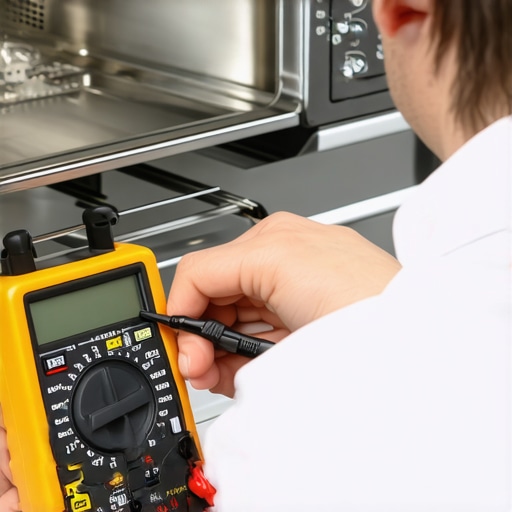
Diagram of a multimeter measuring oven heating element resistance, with clear annotations showing the correct test points and typical readings for functional and faulty components.
Question: How do I maintain my appliances efficiently over time?
Adopting a proactive maintenance routine, including regular cleaning, sensor testing, and keeping spare parts on hand, ensures your appliances remain dependable. Additionally, investing in quality diagnostic tools and understanding how to use them effectively—like performing specific tests with your multimeter—can empower you to tackle most issues before they escalate. Remember, the more you familiarize yourself with your appliance’s inner workings, the better equipped you’ll be to keep them in top condition. For further insights, explore how to properly test your oven’s temperature sensor here. Don’t wait for a complete breakdown—start incorporating these tools and habits today, and you’ll significantly reduce repair costs and extend your appliance lifespan.
The Hardest Lesson I Learned About Oven and Dishwasher Repairs
One of the biggest truths I discovered through troubleshooting is that patience and a systematic approach are more valuable than rushing into part replacements. My initial instinct was to swap out components like the broil element or sensors at the first sign of trouble, but I quickly learned that testing thoroughly before replacing saves both time and money. Often, wiring issues or faulty relays are the culprits hiding behind seemingly broken parts. This lesson pushed me to develop a detailed diagnostic routine, which dramatically improved my repair success rate and reduced unnecessary expenses.
3 Common Myths About Appliance Repairs That Might Hold You Back
Many people believe that a visual inspection reveals all—if a part looks fine, it must be working perfectly. But I’ve found that internal faults, like failed relays or sensor circuits, often look intact. Also, the myth that replacing the most obvious part fixes everything can lead to endless cycles of trial and error. Taking the time to perform multimeter tests and wiring checks uncovers hidden issues and helps you avoid these common pitfalls. For more about avoiding unnecessary replacements, check out how to properly diagnose control board problems here.
What Experts Don’t Usually Say About Diagnosing Oven and Dishwasher Troubles
One insight I’ve gained from working closely with professional repair guides is that the wiring harnesses and connections often get overlooked. Loose or corroded connections can cause intermittent heating or faulty signals that mimic part failures. So, my tip is to regularly inspect and clean these contacts as part of your diagnostic process. Keeping a set of quality tools, like a multimeter and magnetic screwdriver, enables you to do quick checks that save time and prevent unnecessary replacements. Interested in the essential tools I use? Find out more about my top recommendations for DIY appliance troubleshooting here.
Wiring and Connection Checks—The Hidden Heroes of Troubleshooting
One of my lightbulb moments was realizing how often faulty wiring causes problems that look like failed parts. Corrosion, loose screws, or damaged wires can lead to inconsistent power flow, preventing your oven or dishwasher from functioning correctly. Regularly inspecting and cleaning these connections can resolve issues without replacing costly components. This habit has saved me countless headaches and keeps my appliances running smoothly for longer. Remember, sometimes the fix is as simple as re-tightening a wire connector or removing corrosion—details that are easy to overlook but make all the difference.
Progressing from Basic Checks to Smart Diagnostics
If you’re serious about becoming your own repair guru, investing in good diagnostic tools is essential. A reliable multimeter, like the Fluke 117, helps you measure resistance, voltage, and continuity accurately, making troubleshooting more straightforward. I also suggest building a checklist that guides you step-by-step, so no detail is missed. Over time, small upgrades like smart sensors or IoT-enabled monitors will further empower DIYers, but mastering these fundamentals is the foundation for smarter repairs. For in-depth advice on testing your oven’s temperature sensor, see this comprehensive guide.
Empowerment Through Knowledge—Your Repair Journey Starts Now
The most important takeaway is that you don’t need to be a professional to diagnose and fix common oven and dishwasher problems. With patience, the right tools, and a systematic approach, you can save hundreds of dollars and extend your appliances’ lifespan. Remember, every repair is a learning opportunity that boosts your confidence and skills. So, why not start today? Check your wiring, test your components, and keep a diagnostic checklist handy. Your kitchen appliances—and your wallet—will thank you for it. How have your troubleshooting experiences changed your approach to appliance repairs? Share your stories below and get inspired to master your kitchen’s hidden secrets.
Megan Carter
This article really hits home for me, especially the part about doing thorough diagnostics before jumping to replacements. I’ve had my own share of costly errors by replacing parts without proper testing. For example, I once thought my oven’s heating element was dead because it wasn’t heating during baking, but it turned out to be a loose wiring connection at the terminal. It’s amazing how simple issues like that can cause what seems like a major problem.
I’ve also started keeping a checklist for troubleshooting my appliances, which saves me a lot of time. My favorite tool is my multimeter — it’s incredible how much more confident I feel testing resistances and voltages now. Have others found that investing in quality diagnostic tools and developing a routine has helped them avoid unnecessary replacements? Would love to hear what everyone’s best troubleshooting tips are or any particular tools they swear by for appliance repair.