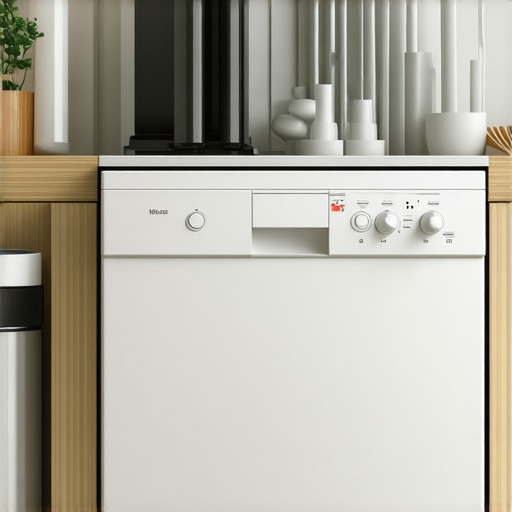
Have you ever opened your dishwasher only to be greeted by a stubborn white film covering your sparkling glasses and shining dishes? I used to think that heavy-duty detergents would do the trick, but week after week, that dull, chalky residue persisted. It was frustrating, especially after investing in new appliances and trying to keep my kitchen spotless. One lightbulb moment hit me during a weekend cleaning spree when I realized the real culprit was hard water—something I overlooked for too long. Since then, I’ve made a mission to find effective solutions, and let me tell you, understanding water hardness and how to fix it can restore your dishwasher’s performance and save you money in the long run.
Why Water Hardness Causes That Unwanted White Film
Water hardness refers to the mineral content, primarily calcium and magnesium, dissolved in your water supply. High mineral levels leave behind deposits on dishes and inside your dishwasher—resulting in that pesky white film. According to the Water Quality Association, around 85% of households face some degree of hard water, which can significantly impact appliance efficiency and cleanliness. If neglected, mineral buildup can even damage your dishwasher’s internal parts, leading to costly repairs. Addressing this issue now is vital, especially as water quality varies with climate and city infrastructure. Luckily, there are practical fixes you can implement today to combat this problem before it worsens.
Have you noticed your glasses looking cloudy or films appearing after every cycle? If yes, you’re not alone. Many homeowners face this persistent issue, but identifying the cause is half the battle. Early on, I made the mistake of simply using stronger detergents, which only masked the problem temporarily. That approach cost me time and extra expenses. Recognizing that mineral content was the true cause helped me focus on the right fixes, like water softening and filter upgrades. If you want to keep your dishes crystal clear without overdoing detergents, it’s time we dive into actionable solutions.
Is Water Hardness Fixing Worth the Hassle?
One of my biggest skepticisms was whether tackling water hardness was really necessary—after all, isn’t this a common issue? Well, I learned the hard way that ignoring mineral buildup can lead to prolonged appliance lifespan and improved cleaning results. Plus, it’s cost-effective. For example, installing a water softener can dramatically reduce mineral deposits, making detergents more efficient. It’s an investment worth considering, especially with the increasing awareness around water quality in 2026. Curious about how to implement these fixes in your own home? Stay tuned, because I’ll guide you through the most effective methods to banish that white film for good, supported by expert tips and personal insight.
Assess Water Hardness and Test Your Dishwasher
Start by checking your water’s mineral levels. Use a test kit or contact your local water provider for hardness reports. If water is hard, mineral deposits are likely the culprit. Then, run a cleaning cycle with a dishwasher cleaner containing rinse agents or descaling agents like citric acid. Observe if the film persists after this initial treatment. I once tested my water after noticing cloudy glasses and found high mineral content, prompting me to take further action.
Install a Water Softener for Long-Term Relief
If your water test confirms high mineral levels, investing in a water softener might be the most effective solution. These systems replace calcium and magnesium ions with sodium or potassium, preventing deposits. You can opt for a whole-house softener or a point-of-use unit attached to your dishwasher’s water inlet. During my upgrade, I installed a small water softener directly on the dishwasher inlet, which noticeably improved cleaning results and reduced film buildup.
Upgrade Your Dishwasher’s Filtration System
Many dishwashers contain filters or inlet screens that trap debris and minerals. Over time, these can clog and diminish water quality, exacerbating residue issues. Regularly inspect and clean these filters—usually located at the water inlet or drain filter—every few months. I found that cleaning the inlet filter with vinegar and a soft brush eliminated minor buildup and restored water flow, reducing white film formation.
Adjust Detergent and Rinse Aid Usage
Too much detergent or inadequate rinse aid can worsen residue problems, especially with hard water. Use the recommended amount of high-efficiency (HE) detergent, and add a quality rinse aid to promote sheeting action that prevents mineral deposits. During my experiment, reducing detergent quantity and increasing rinse aid improved clarity and shine on my dishes. Consider switching to specialized detergents formulated for hard water environments, which can be more effective at dissolving minerals and preventing film.
Implement Regular Maintenance and Monitoring
Ensure your dishwasher operates optimally by scheduling monthly cleaning cycles with descaling agents or vinegar. Keep an eye on water pressure; low pressure can lead to inadequate rinsing, leaving residues. If residue continues despite these efforts, it might be worth inspecting internal components or consulting a professional. For example, I once noticed persistent film despite descaling, and a technician diagnosed a clogged inlet valve—replacing it solved the issue entirely. For more detailed diagnostics, explore solutions for common dishwasher issues such as filter and inlet parts.When it comes to fixing appliances like dishwashers, ovens, or similar household tech, many believe that the biggest mistakes are obvious—using the wrong parts or misdiagnosing issues. However, seasoned technicians understand subtle nuances that can make or break a repair success. One common misconception is the over-reliance on generic replacement parts, which can undermind the appliance’s efficiency and longevity. For instance, installing a universal gasket might seem like a quick fix, but if it doesn’t match the specific model’s tolerances, it could lead to leaks or inadequate sealing, thus compounding problems rather than solving them.
Myth Busting: All Parts Are Created Equal
Many homeowners assume that any replacement component will do, but in reality, using non-original or poorly manufactured parts can cause troubleshooting to become a series of ongoing frustrations. Advanced repair technicians often emphasize that parts like control boards or igniters are tuned precisely for their model’s electronics and mechanical setup. A mismatch here, such as installing a subpar igniter in a gas oven, can result in inconsistent ignition or even safety hazards. To avoid this trap, always opt for OEM (Original Equipment Manufacturer) parts, especially if you’re fixing vital components like the [gas oven igniter and valve](https://appliancebargainz.com/gas-oven-smells-like-gas-4-igniter-and-valve-fixes-2026).
How do diagnostic steps reveal hidden issues that aren’t obvious?
Accurate diagnosis in appliance repair goes beyond swapping parts—it demands understanding the subtle signs and behaviors of your machine. For example, a dishwasher with a cycle that won’t end might seem like a timer or control board failure at first glance. However, deeper inspection may reveal a faulty wiring connection or a sensor misreading, which can be overlooked by amateurs. Experts recommend systematically testing components, checking wiring integrity, and following diagnostic flowcharts, as highlighted in detailed guides such as diagnosing a dead dishwasher cycle with [control board tests](https://appliancebargainz.com/3-control-board-tests-to-fix-a-dead-dishwasher-in-2026).
Beware of shortcuts—bypassing thorough diagnostics and jumping straight into part replacement often leads to repeated failures and increased expenses. I recall a case where replacing a faulty relay in an oven seemed like a fix, but the underlying issue was a damaged wiring connector that caused intermittent power loss. A meticulous approach saved me from wasting time and resources, reinforcing that in appliance repair, the devil is truly in the details.
In essence, mastering appliance diagnostics involves recognizing that sometimes, the most complicated issues stem from small overlooked factors—corroded contacts, incorrect connections, or mismatched parts. Staying alert to these nuances, rather than following generic advice blindly, is what distinguishes a professional from an amateur. For in-depth troubleshooting techniques, you can review articles like [fixes for a kitchen appliance that makes a popping sound](https://appliancebargainz.com/oven-making-a-popping-sound-3-burner-tube-fixes-for-2026).
Have you ever fallen into this trap? Let me know in the comments.
Gear Up with the Right Tools for Longevity
Maintaining appliances like your dishwasher and oven requires more than occasional cleaning; it demands the right tools that allow for precise diagnostics and effective repairs. I personally swear by a high-quality digital multimeter, such as the Fluke 117, which offers accurate voltage and resistance readings essential for troubleshooting control boards and wiring issues. Additionally, a needle-nose plier set helps in removing and installing small components like clips and springs without damaging them. An ultrasonic cleaner is a game-changer for cleaning delicate parts, such as spray arms and igniters, removing mineral deposits that can impair performance. For software diagnostics, I recommend using manufacturer-specific apps when applicable, as they can reveal error codes and system statuses beyond the basic indicators. In my experience, investing in these tools saves hours of guesswork and prevents unnecessary part replacements.

Proper maintenance tools streamline diagnostics and repairs, extending the life of your appliances considerably.
How do I maintain my appliances over time?
Establish a routine schedule for deep cleaning and part inspection, like descaling the dishwasher with a citric acid solution and inspecting door seals for wear. Keep an eye on filter and inlet screens, as clogged parts can cause persistent issues—regularly cleaning them with vinegar and soft brushes is effective. Also, periodically checking wiring connections with a multimeter can preempt electrical failures. Remember, detailed diagnostics are your best friend; always refer to manufacturer manuals or trusted repair guides. For instance, understanding control board diagnostics can be complex but is vital in avoiding misdiagnosis. I recommend reviewing the detailed control board testing procedures to perfect your troubleshooting skills. Consistency in maintenance ensures appliances operate efficiently, saving you money and frustration.
What’s next for appliance repair tools and techniques?
Looking ahead, I see the integration of smart diagnostic devices becoming a norm. Devices that connect via Bluetooth to your smartphone can provide real-time data and repair suggestions, simplifying complex troubleshooting. Augmented reality (AR) apps are also emerging, guiding homeowners through repairs step-by-step. As these innovations mature, I predict a future where even amateurs can perform sophisticated fixes with minimal risk. For now, mastering basic diagnostic tools like multimeters and understanding error codes is essential—start practicing with your appliances today. For instance, troubleshooting a dishwasher that won’t drain can be simplified by checking the drain pump and solenoid valves—learn more about these parts through targeted guides and upgrade your repair game.
Lessons I Learned the Hard Way About Water Hardness and Appliance Care
- Sometimes, the simplest overlooked detail—like water quality—can sabotage your appliance’s performance. I used to think that cleaning and detergent choices were enough, but ignoring mineral content led me down a costly repair path. Recognizing the role of water hardness truly changed my approach to appliance maintenance, saving me time and money in the long run.
- Before jumping into expensive repairs, I found that testing my water’s mineral levels provided critical clues. A simple water test revealed high calcium and magnesium levels, which explained persistent residue issues. Doing this small step early on could save you from unnecessary replacements and keep your appliances running smoothly.
- Investing in a water softening system was my game-changer. Not only did it eliminate white film buildup, but it also improved the effectiveness of cleaning agents. The peace of mind knowing my appliances are protected makes the initial investment well worth it, especially with water quality issues becoming more common in 2026.
My Go-To Arsenal for Troubleshooting and Maintenance
- The Fluke 117 multimeter has been indispensable for diagnosing electrical issues efficiently. Its accuracy helps me identify wiring problems or faulty components without guesswork, extending the lifespan of my appliances.
- A soft brush combined with vinegar-based solutions keeps filters and inlet screens free from mineral deposits. Regular cleaning prevents clogs that lead to residue and poor water flow, ensuring my dishwasher performs optimally.
- Using manufacturer-recommended descaling products or citric acid solutions has made descaling cycles more effective. These tools help prevent mineral buildup from interfering with dishwasher pumps or spray arms, reducing the need for costly repairs down the line.
Take Charge and Transform Your Appliance Care Routine
Understanding and fixing water hardness is more than just a maintenance tip—it’s a crucial step in extending your appliances’ life and ensuring spotless dishes. By testing your water, installing a softener, and maintaining filters, you’re empowering yourself to keep your home running smoothly well into the future. Remember, a little proactive care now means fewer headaches later—so get started today!