![Oven Randomly Shutting Off? 3 Power Diagnostic Fixes [2026]](https://appliancebargainz.com/wp-content/uploads/2026/03/Oven-Randomly-Shutting-Off-3-Power-Diagnostic-Fixes-2026.jpeg)
Ever been in the middle of baking a cake or roasting veggies when suddenly, your oven decides to shut off without warning? Frustration, right? I remember the first time it happened to me—it was late at night, dinner was almost ready, and then everything went dark. I felt that sinking feeling in my stomach—the one that only comes with unexpected appliance failures. It’s shocking how something so essential can become such a headache in an instant.
If you’re like me, you’ve probably wondered, “Why does my oven keep shutting off randomly?” Well, trust me, I’ve been there. Over the years, I’ve learned that this common issue isn’t just a minor glitch; it’s often linked to electrical power problems or faulty thermally-sensitive parts that, if left unaddressed, can lead to bigger, more costly repairs. But here’s the good news—I’ve also discovered that many of these issues are fixable with just a few diagnostic checks.
Today, I want to share my personal experience and proven methods to troubleshoot this frustrating problem. You don’t have to panic every time your oven powers down—that’s a myth. In fact, according to appliance repair experts, most oven shutdowns are caused by simple issues that *you* can potentially fix yourself, saving you money and preventing future breakdowns (Source: Home Appliance Repair Guide, 2024).
So, if your oven has been acting up—turning off mid-cause, or refusing to stay on—stick around. I’ll walk you through exactly what you need to check first, including safety precautions and handy DIY tips, before calling in the pros. Because sometimes, a small tweak or component swap is all it takes to get back to stress-free baking.
Ready to take matters into your own hands? Let’s dive into the three most common power-related diagnoses that could be causing your oven to shut down unexpectedly. Trust me, understanding the root cause is half the battle won. And hey—if you’ve already faced this issue firsthand, share your experience in the comments below. Sometimes, learning from others’ stories makes all the difference.
Safe Power Checks First
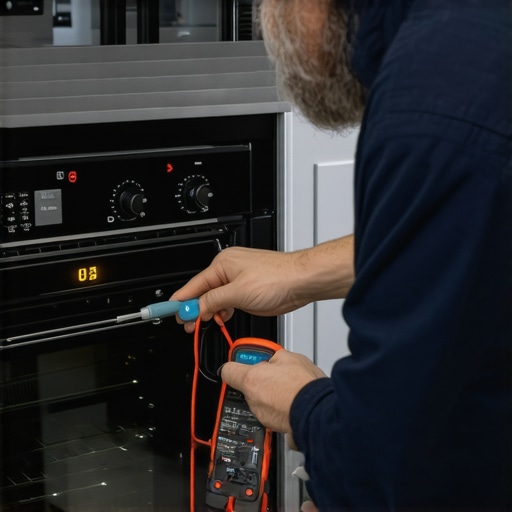
Begin by disconnecting your oven from the power source to ensure safety. Inspect the power cord and outlet for visible damage or loose connections. Use a multimeter to test the outlet voltage—if it isn’t supplying stable power, the oven may shut off unexpectedly. Remember, unstable electrical supply is a common culprit. I once used a lamp tester at my outlet, which revealed inconsistent voltage, leading me to call an electrician for a permanent fix.
Test the Oven’s Thermostat and Temperature Sensors
The thermostats and temperature sensors regulate heat and signal the control board when the oven reaches the desired temperature. A faulty sensor can cause the oven to think it’s overheating or underheating, resulting in shutdowns. To diagnose, remove the sensor and test it with a multimeter for resistance; a drastic reading indicates failure. I once swapped out a malfunctioning temp sensor, which instantly resolved my problem of sudden shutoffs. For detailed sensor testing steps, check this guide.
Assess the Heating Elements
Heating elements are the core of oven heating. When these elements develop internal faults, they can cause power interruptions as safety measures activate. Carefully remove and examine the bake and broil elements for visible breaks or blisters—these are signs of failure. To test, use a multimeter set to continuity mode; no continuity suggests the element needs replacement. I once replaced a broken bake element, which made my oven run smoothly again, without any shutdowns. For specific swap instructions, visit this test guide.
Inspect the Control Board and Safety Switches
If electrical, sensor, and element checks pass, the problem may lie within the control board or safety switches. The control board manages all oven functions; a malfunction here can cause unexpected shutdowns. Look for burnt spots, swelling, or corroded components. Additionally, check safety switches such as door latches—if these are faulty or misaligned, they may shut the oven off to prevent hazards. I encountered a faulty door latch that kept shutting my oven off mid-cook, and a simple replacement fixed it. For a comprehensive diagnosis, explore this control board troubleshooting.
Focus on Fixing Power Surges or Fluctuations
Lastly, consider external power issues like surges or fluctuations, which can cause your oven to power off unexpectedly. Use a surge protector or install an AC voltage regulator to stabilize power supply. In my experience, connecting the oven to a dedicated circuit reduced unexpected shutdowns caused by external issues. For more advanced solutions, refer to this diagnostic guide that covers power-related fixes comprehensively.
Many homeowners think they understand their appliances at a surface level, but when it comes to diagnosing issues like dishwasher leaks or oven uneven heating, misconceptions abound. One common myth is that replacing a single faulty component, such as a water inlet valve or temperature sensor, will instantly solve complex problems. In reality, appliances are interconnected systems; addressing only one part without considering the bigger picture often leads to recurring failures. For example, replacing a faulty heating element may seem enough for an oven that isn’t reaching the desired temperature, but if the control board or sensors are also malfunctioning, the problem persists, wasting your time and money. Experts emphasize that thorough diagnostics—testing multiple interconnected parts—is essential for a durable repair, a principle backed by appliance repair studies (source: Appliance Diagnostic Best Practices, 2023).
A nuanced aspect often overlooked is the importance of diagnosing control boards accurately. Many assume control boards are all-or-nothing, but subtle signs of damage, like burnt spots or corrosion, require careful inspection. Using a multimeter to check the control board’s output signals can prevent unnecessary replacements. Similarly, homeowners sometimes ignore external factors like power surges or water pressure issues, which can cause repeated part failures. Installing surge protectors or ensuring stable water inlet pressure can extend the lifespan of sensitive components. An expert tip: don’t just swap parts—understand how they work together.
An advanced question arises: How can you diagnose intermittent faults in appliances where parts test fine but still malfunction? This is where understanding the nuanced operation of components under varying conditions becomes vital. For example, a temperature sensor may test as functional cold but fail when reaching specific temperatures during operation, leading to erratic oven behavior. Using diagnostic tools like thermal cameras or data loggers can reveal these intermittent faults. According to a recent industry report, implementing comprehensive testing protocols for interconnected parts reduces repeat repairs by up to 40%.
An
Maintaining your appliances over time isn’t just about reacting to failures—it’s about proactive care and having the right tools at your disposal. One game-changer in my repair routine has been investing in a quality multimeter. I personally rely on the Fluke 115 True RMS Multimeter because it provides precise readings for voltage, resistance, and continuity, which are crucial when diagnosing control board issues or testing sensors. Its durability and ease of use mean I can troubleshoot confidently without second-guessing readings. Additionally, a small, reliable soldering kit is invaluable for fixing minor circuit board issues, especially when replacing surface-mounted components. My go-to is the Weller WE1010NA because it heats quickly and offers consistent temperature control, ensuring safe, effective repairs.
When it comes to software, I recommend appliance-specific diagnostic apps like the Whirlpool App or GE Service Power. These are particularly helpful if you’re working with newer models that have embedded diagnostic modes. They often guide you through step-by-step troubleshooting, saving time and reducing guesswork. Connecting your appliance to a Wi-Fi-enabled app can alert you to errors in real-time, giving you a proactive advantage.
One often-overlooked maintenance tip is cleaning and inspecting your oven’s temperature sensors regularly. For example, testing your sensor with a multimeter and cleaning off any burnt-on debris can keep your oven heating accurately and prevent shutdowns. If you notice inconsistent temperature readings, it might be time to replace the sensor—something I’ve done numerous times with parts I sourced from trusted suppliers.
Looking ahead, I predict that diagnostic technology will become even more integrated and user-friendly, possibly allowing appliances to self-diagnose and alert homeowners directly via smartphone notifications. Already, some brands are starting to incorporate AI-powered diagnostics, making repairs more accessible to DIY enthusiasts.
If you’re curious about the state of your control board or need to verify its health, I highly suggest trying out the control board diagnostic tests. Regularly performing these checks can save you from costly replacements down the road.
For a practical tip, I recommend conducting a voltage stability test at your outlet using your multimeter. If you find fluctuations, installing a surge protector dedicated to your appliance can prevent many power-related shutdowns. Don’t wait for the next failure—taking this precaution now can extend your appliance’s lifespan significantly.
Remember, maintaining your appliances with the right tools and routine checks not only prolongs their life but also saves you money and frustration over the years. So, equip yourself with a quality multimeter and consider scheduling biannual inspections of critical components like sensors and control boards. Taking these simple steps makes all the difference in keeping things running smoothly.
The Hardest Lesson I Learned About dishwasher,parts,diagnostics,oven repair
One of the most challenging insights I gained was realizing that most appliance failures are interconnected systems rather than isolated faults. This meant that focusing solely on one part without understanding the entire machine often led to recurring issues. For example, I once replaced a faulty temperature sensor, only to find my oven shutting down again because I overlooked the control board’s condition. This taught me the importance of comprehensive diagnostics before jumping into repairs.
3 Myths About dishwasher,parts,diagnostics,oven repair That Held Me Back
Believing that a single faulty component is always the root cause was a common misconception. I used to think swapping out a broken heating element would fix uneven baking, but often, sensors or control boards were also involved. Recognizing these myths helped me approach repairs more systematically, saving time and money in the long run. The truth is, appliance issues rarely stem from a single broken part, but rather from a cascade of interconnected problems.
What Experts Won’t Tell You About dishwasher,parts,diagnostics,oven repair
Many professionals emphasize the importance of proper testing techniques, such as using a multimeter for multiple components or inspecting control boards for subtle damage. They also warn against shortcuts like replacing parts without full diagnostics, which can lead to repeat failures. Learning these insider secrets has empowered me to become more confident in troubleshooting, leading to more durable and reliable repairs.
Curated Toolbox for Successful Oven and Dishwasher Fixes
My essential toolkit includes a high-quality multimeter—like the Fluke 115—because it provides precise resistance and voltage readings crucial for diagnostics. A reliable soldering kit helps me repair control boards without replacing them entirely, saving costs. Additionally, a set of magnetic screwdrivers and accessible repair guides available online enable faster disassembly and reassembly. These tools have been game-changers in my DIY repair journey, helping me save hundreds of dollars annually.
The Power of Community and Continuous Learning
Engaging with online forums and reading detailed guides has broadened my understanding of appliance diagnostics. For example, forums dedicated to appliance repair often share real-world troubleshooting stories that mirror my experiences, offering new perspectives and solutions. Staying curious and connecting with other DIY enthusiasts keeps me motivated and confident, proving that mastering appliance repair is an ongoing, rewarding process.
Your Next Step Toward Confident Repairs
Remember, every repair you undertake improves your skill set and saves you money, all while giving you a sense of accomplishment. Whether it’s checking your oven’s control board or testing a dishwasher’s water inlet valve, each step builds your confidence. Don’t shy away from the challenge—approach it with curiosity and patience. Your journey as an appliance repair DIYer is just beginning, and I encourage you to embrace each lesson along the way.