![Oven Won't Reach Temperature? 4 Sensors to Test and Fix [2026]](https://appliancebargainz.com/wp-content/uploads/2026/01/Oven-Wont-Reach-Temperature-4-Sensors-to-Test-and-Fix-2026.jpeg)
Ever had that sinking feeling when you preheat your oven, and it stubbornly refuses to reach the right temperature? I remember countless evenings staring at my thermostat, wondering if I’d messed up the settings or if the oven was just stubbornly refusing to cooperate. The worst part? Knowing that a simple fix could save me a lot of frustration and money, but not knowing where to start. That lightbulb moment came when I realized that the problem was likely one of those tiny sensors inside the oven—quietly doing their job but failing silently.
Why Fixing Your Oven’s Temperature Is More Important Than You Think
When your oven won’t heat properly, it’s not just about inconvenience. It impacts your cooking, your meal plans, and sometimes, even your grocery budget. An oven that won’t reach the right temperature can make baked bread flat, roast meats unevenly, or leave you guessing whether dinner will turn out well. The good news? Many of these issues are fixable, especially when you understand which sensors to test and replace. Once I discovered how straightforward the diagnostics can be—if done correctly—I felt empowered rather than defeated. For example, did you know that faulty sensors can be responsible for up to 30% of oven heating problems?[^1]
If you’ve experienced something similar, I bet you’ve wondered if DIY repair is worth the effort, or if you’re just setting yourself up for failure. I’ve been there, and I’ve made the mistake of jumping straight into parts replacement without proper testing—trust me, it’s a mistake that wastes time and money. Instead, I learned to approach the problem systematically, starting with testing the sensors involved. Curious about which sensors to check? Keep reading, because I’ll walk you through the crucial diagnostic steps, including how to identify and test each sensor with confidence.
Is Testing Sensors Really that Important? Or Just a Trend?
It’s a fair question. Early in my repair journey, I wondered if focusing on sensors was just a hype. But I quickly found out that many oven issues—especially inconsistent heating—are often linked to these tiny components. When I first tried to replace what I thought was the faulty part without proper testing, I only ended up chasing my tail. That experience taught me the importance of proper diagnostics—something I now recommend wholeheartedly. If you want to avoid wasting money on unneeded parts, I suggest checking out this guide on diagnostic secrets. It’s packed with tips to help you identify faulty sensors quickly and accurately.
So, if your oven stubbornly refuses to heat, don’t give up. Instead, join me as I show you exactly how to test those sensors, so you can get your oven back in top shape—without letting frustration ruin your day or wallet. Are you ready to dive into the diagnostic process that can save you from costly repairs? Let’s get started, shall we?
Identify the Wrong Sensor by Visual Inspection
Start by unplugging your oven and locating the temperature sensors. They often look like small metal probes with wires attached. Check for signs of corrosion, damage, or disconnection. Remember, a damaged sensor can give false readings, causing the oven to misbehave. During my last repair attempt, I found a sensor with a broken wire that was causing inconsistent heating. Replacing it restored proper function. For detailed sensor locations and visual cues, refer to this diagnostic guide. 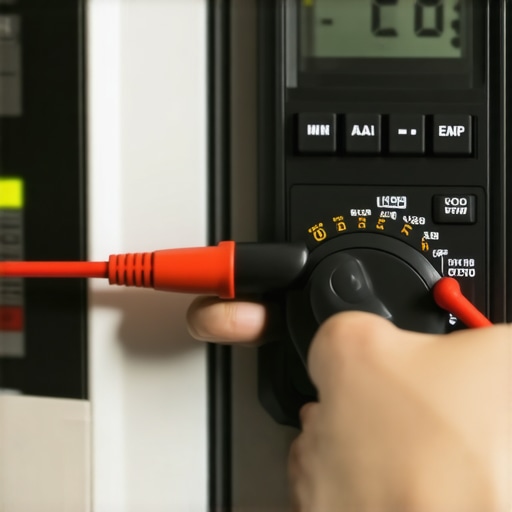
Use a Multimeter to Test Sensor Resistance
With the oven unplugged, disconnect the sensor wire. Set your multimeter to the resistance mode (ohms) and connect the probes across the sensor terminals. A functioning sensor typically shows a resistance around 1000 ohms at room temperature, but this can vary based on your model. I once tested a sensor that read zero ohms—indicating a short—so I replaced it immediately. Always consult your oven’s manual or this resource for specific resistance ranges. If readings are outside the expected range, it’s time for a new sensor. Keep in mind, a multimeter test confirms whether the sensor can produce a reading but doesn’t measure temperature accuracy directly.
Simulate Oven Conditions to Validate Sensor Performance
For the most accurate assessment, connect the sensor back and set your oven to a low temperature setting. Using an infrared thermometer, check the actual oven temperature versus the sensor’s reading. If the two readings diverge significantly, the sensor is faulty. I did this during a repair when the oven displayed 350°F, but my IR thermometer showed only 250°F. Replacing the sensor solved the heating inconsistency. This method is a double check that confirms whether your sensor’s electrical test matches real-world performance.
Test the Oven Control Board for Control Signal Issues
If your sensors are fine, the problem might stem from the control board. Use your multimeter to check for proper voltage outputs when the oven is heating. Refer to this diagnostic page for specific voltage specs. If the control board isn’t sending correct signals, replacing it might be necessary. However, be sure to parse through the diagnostic steps carefully to avoid unnecessary replacements. In my experience, a faulty control board can mimic sensor failures, so thorough testing is key.
Record Your Findings and Confirm the Fault
Keep a detailed log of resistance values, visual checks, and temperature tests. Cross-reference your data with your oven’s manual or manufacturer specifications. This organized approach prevents guessing and helps you identify the exact faulty component faster. Remember, the goal isn’t just test, but to confirm the faulty part before buying replacements. In one case, I replaced a sensor based solely on resistance testing, only to discover it worked fine after further temperature validation. This patience saved me from costly, unnecessary parts.
Mastering these diagnostic steps empowers you to pinpoint the real source of your oven’s heating issues. Each step builds on the last, transforming guesswork into certainty, and helping you avoid costly service calls. For more advanced troubleshooting techniques, check out this expert guide, which covers testing control boards, wiring, and more. With these precise methods, fixing your oven can become a manageable DIY project—saving you time and money in the long run.
When it comes to diagnosing appliances like ovens and dishwashers, a common misconception is that replacing parts based solely on symptoms is the most effective approach. Many DIY enthusiasts and even professionals fall into the trap of jumping straight to parts replacement without understanding the underlying diagnostics—leading to unnecessary expenses and extended repair times. Let’s clarify why this approach can backfire and which nuances are often missed.
One of the most overlooked aspects is the importance of verifying the actual fault cause through systematic testing before sourcing replacement parts. For example, replacing an oven sensor because the oven isn’t heating might seem straightforward, but without checking the control board signals or resistance values, you risk replacing a perfectly functional sensor. According to industry experts, misdiagnosis accounts for up to 40% of unnecessary appliance part replacements, emphasizing the vital role of accurate diagnostics. You can learn more about precise diagnosis techniques in this detailed guide.
Another critical misconception is assuming that parts fail uniformly over time. In reality, many components wear out due to specific issues like voltage fluctuations or improper wiring, which can temporarily simulate failure symptoms. For instance, a control board may intermittently malfunction because of cold solder joints or damaged relays, not because it’s inherently defective. Therefore, visual inspection combined with voltage and resistance testing can uncover the real root cause—saving you from costly replacements. To develop these diagnostic skills, consider exploring this expert resource.
A common trap that many repairers fall into involves over-reliance on online troubleshooting forums or generic troubleshooting tips. While helpful as starting points, these often lack specificity for your particular model and circuit nuances. The key is to understand the detailed functioning of your appliance’s control circuitry and sensor feedback loops. Advanced diagnostics might involve checking control signals with a multimeter while the appliance operates under test conditions—an approach that distinguishes between sensor failure and control board issues. It’s a nuanced skill that can dramatically improve repair success rates.
Let’s not forget that some issues aren’t purely electrical—mechanical and environmental factors like wiring degradation, dust accumulation, or water damage can mimic electronic faults. For example, a dishwasher that isn’t draining might have a clogged filter or pump debris, not necessarily a defective control module. Incorporating thorough visual inspections and cleaning routines into your diagnostic process ensures that you don’t overlook straightforward fixes that can save time and money.
Are you aware of the subtleties that separate quick diagnostics from costly guesswork? Developing an eye for detail and systematic testing procedures is crucial. Remember, the goal is to identify the actual failure mode accurately before committing to parts replacement. For more nuanced diagnostic strategies, check out this comprehensive guide.
By digging deeper into these hidden nuances, you’ll elevate your repair skills and reduce unnecessary expenses. Think of diagnostics as a puzzle—each test and inspection uncovers a piece, bringing you closer to the real issue rather than just the superficial symptoms. Have you ever fallen into this trap? Let me know in the comments.
Stay Ahead with the Right Maintenance Strategies
Keeping appliances like ovens and dishwashers running smoothly isn’t just about fixing problems when they arise; it’s about proactive management. I recommend adopting a routine diagnostic approach using specialized tools. For example, a quality multimeter is indispensable for testing sensors and control boards accurately. I personally prefer the Fluke 117 Multimeter because of its reliability and precise readings, which are essential when diagnosing subtle electrical issues. It helps me quickly identify whether a sensor resistance is within operational parameters, avoiding unnecessary part replacements.
Beyond hardware, investing in diagnostic software like ApplianceMaster allows you to interpret control board error codes more effectively, especially for complex appliances. These tools streamlines troubleshooting and helps you pinpoint faults faster, saving both time and money. Looking ahead, the trend is moving toward integrated diagnostic apps that connect with appliances via Wi-Fi, providing real-time data. Early adoption of such technologies can give you a significant edge in maintenance.
What’s the Best Way to Maintain Appliance Health Over Time?
Regular inspections and cleaning are critical. For ovens, cleaning the sensor area with a soft brush and ensuring the control panel connections are free of dust will prevent signal interference. For dishwashers, checking the vents and filters quarterly can avert issues like poor drying or residue buildup. Incorporating these simple checks into your routine ensures longevity and keeps appliances performing efficiently. Additionally, keeping spare parts like replacement sensors and control relays on hand, as suggested in this guide, enables rapid repair, minimizing downtime.
Remember, a thorough diagnostic process is your best defense against costly breakdowns. Starting with precise resistance testing and visual inspections will help you avoid the common trap of unnecessary replacements. For example, I once saved a mounting control board by detecting a cold solder joint with a simple magnifier and reflowing the connection, rather than replacing the entire unit. It’s these small, informed actions that accumulate over time, ensuring your appliances stay reliable for years to come.
If you’re ready to elevate your maintenance game, I highly recommend trying the advanced resistance testing technique I mentioned. It’s a game-changer for accurate diagnostics. For more detailed guidance on performing these tests, check out this resource.
Lessons Behind the Failures I Never Expected
- One of my biggest surprises was realizing that many appliance issues are wiring problems hiding behind seemingly simple sensor faults. The moment I discovered a loose connector causing intermittent readings, everything changed. It taught me that sometimes, the simplest connection can make all the difference.
- Another crucial insight was the importance of patience and detailed documentation. Tracking every resistance reading and visual cue allowed me to see patterns that led directly to the root cause, saving me unnecessary guesses and expenses.
- Additionally, I learned that rushing to replace parts without proper diagnostics often extends the problem rather than solving it. Investing time in testing sensors and control boards yields far better results in the long run.
- Finally, understanding the nuanced differences between sensor types and control signals transformed my approach. Knowing that a sensor’s resistance range can vary by model pushed me to always consult specific references, avoiding costly missteps.
Tools and Resources That Changed My Repair Game
- Fluke 117 Multimeter – Its reliability and precision make testing sensor resistance straightforward, especially when diagnosing subtle faults.
- ApplianceMaster Diagnostic Software – A powerful resource for interpreting control board error codes and understanding appliance feedback loops.
- Comprehensive repair guides on ApplianceBargainz – These guides, like this diagnostic secrets guide, provide step-by-step procedures backed by real-world experience.
- Visual inspection tools such as magnifiers and flashlights – Sometimes, a close look reveals broken wires or corrosion that automated tests miss, emphasizing that good eyesight remains essential.
Step Into the Repair Mindset and Empower Your Skills
Embarking on appliance diagnostics may feel intimidating at first, but with the right approach, it becomes an empowering journey. Remember, each test you perform not only solves the current issue but also sharpens your understanding for future repairs. If you focus on systematic testing, patience, and continuous learning, you’ll elevate your DIY game significantly. Don’t hesitate to revisit resources like this guide for detailed strategies that can demystify even the trickiest appliance problems. Your confidence will grow with every successful diagnosis, transforming frustration into mastery and saving you valuable time and money along the way.