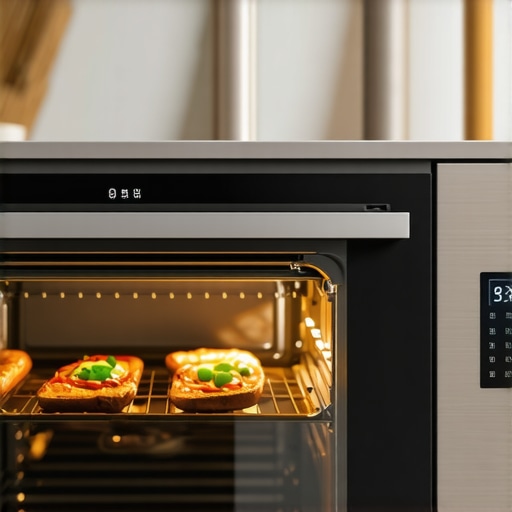
I vividly remember a Sunday roast that went up in smoke because I ignored a tiny, unexplained error message on my oven. The smell of burnt meat and the sinking feeling of wasting ingredients hit me hard. That moment was a wake-up call—one that made me realize how often I overlook the small sensors inside our appliances until it’s too late. It’s frustrating, isn’t it? Fixing a burnt dinner because your oven’s temperature sensor isn’t working properly shouldn’t happen, but it does. Today, I’ll show you how testing your oven sensors can save your meals—and your sanity.
Stop the Burn: Testing Oven Sensors Before Disaster Strikes
Are You Tossing Money and Food Away for No Good Reason?
In fact, faulty oven sensors are responsible for a huge chunk of kitchen appliance failures. According to appliance repair experts, ignoring sensor issues can lead to inconsistent cooking times, safety hazards, and costly repairs. If you’ve been battling uneven baking or constant error messages, you’re not alone. I used to think I was just unlucky—until I learned that a simple sensor test could prevent most of these headaches. When I first made this mistake, I assumed my oven just needed a new thermostat, but it turned out to be a faulty sensor. If you want to avoid my costly trial-and-error, understanding how and why to test your oven sensors is essential. Trust me, regular checks can make all the difference. Curious how to do this yourself? Stay tuned, because I’ll guide you through practical, easy tests that anyone can learn. For more detailed guidance, check out this comprehensive oven repair guide. Testing now can save you from more extensive repairs later. Ready to protect your kitchen and your food? Let’s dive into the why behind these sensors, and how to know if they’re working properly.
Locate and Access the Sensor
Start by unplugging your oven to avoid electrical shock. Find the sensor, typically a thin, metal rod or a thermistor behind the oven’s control panel or attached near the heating element. Use a screwdriver to remove any panels securing it. Remember, if you’re unsure about accessing internal components, consult your oven’s manual or watch specific repair videos for your model.
Disconnect and Remove the Sensor
Carefully disconnect the wiring connector attached to the sensor. Use pliers if necessary. Gently unscrew or unclip the sensor from its mounting point. Take note of its position for accurate reinstallation. Handling it with care prevents damage that could lead to erroneous test results.
Test Resistance with a Multimeter
Set your multimeter to the resistance (Ω) setting. Touch the meter’s probes to the sensor’s terminals. A functional sensor typically shows a resistance between 100kΩ and 200kΩ at room temperature. If the reading is outside this range or shows ‘OL’ (open loop), the sensor is faulty and needs replacement.
Micro-Story:
Once I removed a sensor from my oven, I hooked my multimeter and got a resistance reading of over a megaohm, indicating an open circuit. Replacing it fixed my inconsistent baking issues. This simple test saved me from buying a new oven!
Check Continuity of Wiring and Connectors
Switch your multimeter to the continuity setting. Place the probes on the wiring harness and the sensor’s connector. A beep indicates continuity. No beep suggests a broken wire or faulty connector, which can cause inaccurate sensor readings or no readings at all.
Reinstall and Test in Situ
Reconnect the sensor and wiring, secure it in its original position, and reassemble panels. Plug your oven back in and run a diagnostic cycle if available. Observe whether error codes appear or if the oven heats evenly. This confirms the sensor’s status without needing more invasive checks.
Tips to Ensure Accurate Testing
Use a controlled environment—avoid testing in extreme temperatures. Ensure the oven is unplugged during removal and reconnection. Always handle electronics with dry, insulated tools. For complex issues, consider consulting the comprehensive repair guide.
” alt=”Technician testing oven temperature sensor with multimeter” title=”Testing oven sensor with multimeter”/>Many homeowners assume that diagnosing appliance issues is straightforward, but the reality is far more nuanced. For instance, a widespread misconception is that a single faulty part, like a door latch or heating element, is the root cause of all problems.However, this belief overlooks the interconnected nature of appliance systems. Often, an issue that appears to be caused by a specific component is actually a symptom of an underlying problem elsewhere. For example, some believe that replacing a thermostat guarantees a successful repair, yet if the control board or wiring has issues, the new thermostat won’t resolve the problem.
The ‘Oops’ factor in appliance diagnostics is underestimating the importance of fully checking the circuit and control systems. Jumping straight to parts replacement without comprehensive testing can lead to wasted money and ongoing frustrations. For example, a faulty timer or worn-out wiring might cause the same symptoms as a failed pump or sensor, but the solution lies in diagnosing the root cause accurately. In fact, according to experts like those at this repair guide, a methodical diagnostics approach saves time and cost.
What Advanced Diagnostics Can Reveal That Basic Checks Miss?
For seasoned DIYers and technicians, understanding the subtleties between symptoms and actual faults is crucial. For example, in dishwasher troubleshooting, a water fill problem might be blamed on the inlet valve, but a deeper look might uncover a malfunctioning float switch or a clogged filter, which are often the hidden culprits. Similarly, with ovens, inconsistent heating might seem like a sensor issue, but it could stem from a faulty relay or control board. Performing resistance and continuity tests on wiring and control components, as outlined in this resource, is essential for accurate diagnostics.
Another point many overlook is that parts can fail prematurely due to installation errors or environmental factors like moisture or temperature fluctuations. Recognizing these nuances prevents misdiagnosis and ensures a longer lifespan for replacements.
Before diving into repairs, keep in mind that the complexity of modern appliances often surpasses basic troubleshooting. Investing in comprehensive diagnostic techniques not only improves repair success but also enhances safety. Have you ever fallen into this trap? Let me know in the comments.Maintaining your kitchen appliances, from ovens to dishwashers, requires more than just basic knowledge; it demands the right tools and methods to diagnose and fix issues efficiently. One essential piece of equipment I rely on is a high-quality digital multimeter. I personally prefer the Fluke 117 because of its accuracy and durability, which allows me to measure resistance, voltage, and continuity reliably, even in tight spaces. Using such a multimeter, I check sensors and wiring connections to catch faults early, saving time and money. Additionally, I recommend keeping a digital infrared thermometer, like the Fluke 62 MAX, handy. It helps rapidly identify hot and cold spots in appliances, indicating potential problems like heating element failures or insulation issues that might not be obvious visually. For diagnosing complex electronics or control boards, I utilize specialized software such as appliance-specific diagnostic apps—mostly vendor-agnostic ones like the Appliance Diagnostics Suite. These tools can interpret error codes and suggest likely causes, streamlining troubleshooting. Of course, the importance of verifying appliances’ operational states post-repair cannot be overstated, which is why I also rely on a solid set of repair manuals and wiring diagrams. The more familiar I am with the internal schematics, the faster I can target the faulty component without unnecessary disassembly. Looking ahead, I think the trend will move toward integrated diagnostic tools that connect directly to appliances through IoT modules, offering real-time insights. To stay ahead, I recommend mastering current multimeter and infrared thermometer techniques to perform accurate diagnostics today. How do I maintain appliance diagnostics over time? Regular calibration of your multimeter, along with updating your knowledge on the latest repair guides like these expert resources, ensures your tools stay reliable and your troubleshooting remains precise. Don’t hesitate—try testing your oven sensor resistance with your multimeter this week to sharpen your diagnostic skills and prevent future mishaps.
Lessons Only Insiders Procure from Experience
– I once hurried through testing an oven sensor and replaced a seemingly faulty component only to discover the wiring was the real culprit. The lesson? Never overlook the wiring integrity; it’s often the hidden obstacle behind sensor failure messages.
– Over time, I realized that relying solely on resistance readings can be misleading if the sensor isn’t at room temperature. Incorporating external temperature measurements drastically improved diagnostic accuracy.
– I learned that documenting each step during sensor removal helps prevent reassembly errors—something I wish I had prioritized earlier.
– Understanding the subtle differences between sensor types saved me from unnecessary replacements. Differentiating thermistors from RTDs—not all sensors are created equal—can make a big difference in troubleshooting.
– The most profound lesson? Regular maintenance checks, including sensor tests, significantly extend appliance lifespan and reliability, making DIY diagnostics a worthwhile habit.
Tools That Became My Repair Allies
– The Fluke 117 multimeter has been a game-changer for precise resistance and continuity tests, ensuring my diagnoses are trustworthy. I depend on it for quick and accurate readings in tight spaces.
– An infrared thermometer like the Fluke 62 MAX helps me spot uneven heating patterns that clues alone might miss, providing a secondary layer of insight.
– I trust appliance-specific diagnostic apps because they interpret error codes instantly and guide me toward the exact faulty component—saving me hours of guesswork.
– Wiring diagrams and service manuals are my secret weapons, helping me navigate complex control boards with greater confidence and speed.
Keep Moving Forward: Your Repair Future Awaits
Testing your oven sensors and mastering diagnostics is more than a skill—it’s a pathway to independence and confidence in your home maintenance. Each successful check eliminates guesswork, saves money, and keeps your appliances running smoothly. Don’t wait for a breakdown to act—equip yourself today with the knowledge and tools to troubleshoot proactively. Remember, the more you learn now, the fewer surprises your kitchen will throw your way tomorrow. So, why not start by testing that sensor you’ve been putting off? Your kitchen—and your wallet—will thank you.