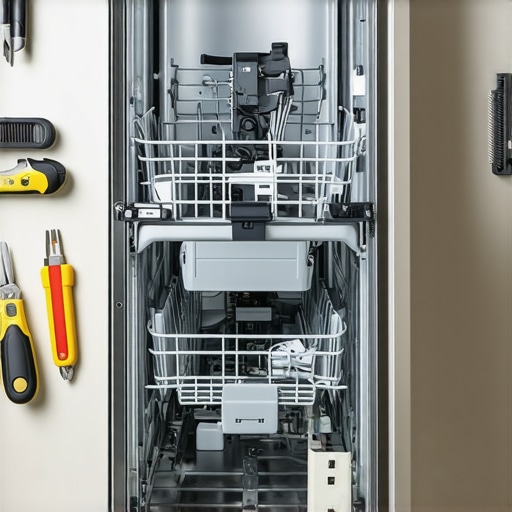
It was a Thursday evening, and I was midway through washing a mountain of dishes when suddenly, my dishwasher stopped humming. Instead, I heard a faint clink and then silence. That sinking feeling hit me — I had just faced a breakdown that left me staring at a fixture I thought I knew inside out. Sound familiar? We’ve all been there, frustrated and vulnerable, wondering why our trusted appliance has suddenly betrayed us.
Why Getting to the Heart of Dishwasher Troubles Matters Now
Over the years, I’ve realized that understanding the core of dishwasher problems isn’t just about fixing one broken cycle; it’s about saving time, money, and a lot of headaches down the line. With innovations coming fast—like smarter diagnostics and efficient parts—21st-century repairs demand more than just basic know-how. According to industry research, a significant number of dishwasher failures can be resolved quickly if you know the right diagnostic strategies—saving homeowners hundreds on costly repairs or replacements (source).
So, what makes this guide different? I’ll share practical insights drawn from my own experiences, mistakes I’ve made early on, and a straightforward approach that puts you back in control. Whether you’re a DIY warrior or just tired of waiting for service techs, this guide will help you decode your dishwasher’s behavior using smart diagnostics and effective parts. Today, we’re going to dive into the nitty-gritty of troubleshooting, with targeted strategies that cut through the guesswork.
Feeling Skeptical About DIY Repairs? You’re Not Alone
Honestly, I was once that person who thought all repairs should be handled by professionals. My first attempt at diagnosing my dishwasher was a disaster—I replaced a part unnecessarily, costing myself time and cash. But I learned quick: doing your homework improves outcomes immensely. If you’ve ever hesitated because you fear making things worse or wasting money, I get it. But with the right info and a bit of patience, you’ll find that many repairs are well within your reach, especially with reliable diagnostic tips and the best [parts for quick fixes](https://appliancebargainz.com/ultimate-dishwasher-troubleshooting-parts-guide-for-2025). Ready to start troubleshooting smarter, not harder? Let’s go.
Test the Power Supply First
Before delving into complex diagnostics, ensure your dishwasher is receiving power. Check if the outlet has power using a multimeter or by plugging in another device. I once spent hours diagnosing a rinse cycle issue only to realize it was a blown fuse in the circuit breaker. Confirming power availability saves time and unnecessary part replacements.
Inspect the Door Latch and Switch
The door latch acts like a gatekeeper—if it’s faulty, the dishwasher won’t start. I recall a repair where a broken latch caused the machine to be unresponsive. To test it, manually press the latch; if the machine doesn’t respond, test the switch with a multimeter. Replacing a worn latch switch restored normal operation instantly. For detailed steps, see our diagnostics guide.
Check the Circulation Pump and Motor
Imagine your dishwasher as a car engine—if the pump isn’t pushing water, your dishes stay dirty. I once found that debris clogged the circulation pump impeller, causing a no-heat wash. Remove the pump cover, inspect for blockages, and test the motor continuity with a multimeter. If faulty, replacing the pump assembly is straightforward with the right parts. Visit our parts strategy for guidance.
Examine the Heating Element for Malfunction
A dishwasher that doesn’t heat water leaves dishes grimy. I had a case where the heating element was burnt out, which was evident upon visual inspection. To test, disconnect power, remove the cover, and use a multimeter to check for continuity. A broken element needs replacement; luckily, parts are affordable, and the process is similar across models. For detailed troubleshooting steps, see the repair tips.
Assess the Drain System Carefully
Clogs in the drain hose or filter lead to standing water. I once cleared a stubborn blockage by disconnecting the drain hose, removing debris, and inspecting the drain pump. Make sure the hose isn’t kinked and the pump operates smoothly. Using a multimeter, verify the pump motor’s functionality, replacing it if dead. Effective drain troubleshooting can prevent further repairs—more info is available in our drain system guide.
Use the Diagnostic Mode Effectively
Many modern dishwashers have built-in diagnostic cycles. I once retrieved error codes by entering diagnostic mode, pinpointing a faulty sensor. Consult your model’s manual to activate this feature, which typically involves pressing specific buttons. Interpreting error codes streamlines diagnostics and directs your focus to the culprit component, saving you time and money.
Keep Track of Symptoms and Patterns
Note what happens during operation—strange noises, leaks, or failure at specific stages. During a repair, I discovered that my dishwasher only failed during the drying cycle, indicating a problem with the heating element or sensor. Recording symptoms helps when sourcing parts or consulting guides, minimizing guesswork. Use the insights from comprehensive guides to interpret issues accurately.
Order the Right Replacement Parts
Once you’ve identified the faulty component, sourcing quality parts is key. I learned the hard way that cheap replacements often lead to repeated problems. Refer to the model number and use reputable suppliers, like those listed in our parts recommendations. Proper installation following manufacturer instructions ensures longevity and optimal performance.
Many homeowners and even seasoned DIY enthusiasts believe that oven repair is straightforward—simply replace the faulty part you identify during quick visual inspections. However, this oversimplification often leads to unnecessary expense and repeated failures. In my experience, one of the most overlooked nuances is the significance of understanding the interconnectedness of various components and the diagnostic sequences that reveal underlying issues, rather than just symptomatic replacements. For example, a faulty oven thermostat might seem like the obvious culprit, but sometimes the real problem lies in a malfunctioning control board or relay, which requires a different diagnostic approach. Relying solely on common wisdom can trap you into replacing parts prematurely and missing how different components influence each other.
Misconceptions about parts and their longevity – Many assume that a new part will last as long as the original, but in reality, poor-quality replacements or incorrect part matching can cause repeated failures. Always verify compatibility and source parts from reputable suppliers listed in our comprehensive parts guide. Additionally, understanding the nuances of modern oven circuitry, such as the role of sensor modules and electronic control units, can help prevent costly misdiagnoses that stem from outdated assumptions about traditional oven components.
The dangers of limited diagnostic scope – Beginners often focus on visible signs, like heat or control glitches, without employing systematic diagnostics. Skipping steps such as testing the thermal sensors, relays, and control boards in sequence can cause you to overlook the root cause. For advanced troubleshooting, employing multi-point testing protocols—similar to those outlined in our diagnostics strategies—ensures a thorough diagnosis, saving both time and money.
Why do some oven repairs succeed initially but fail shortly after?
This often boils down to misdiagnosis and ignoring the importance of environmental factors like electrical supply stability or improper calibration of sensors. External factors, such as voltage fluctuations, can stress electronic components, causing premature failure. Many professionals advocate for testing the electrical environment and ensuring proper grounding before replacing parts. As expert studies suggest, neglecting such factors can lead to repeated repairs and hidden costs, as highlighted in our detailed repair guide.
Remember, effective oven repair hinges on mastering diagnosis beyond surface symptoms. By avoiding common myths and understanding the complex interplay of components, you’ll improve your repair success rate significantly. Do you have a repair story about falling for one of these misconceptions? Share your experience in the comments, and let’s discuss how you overcame it!
Extending Appliance Lifespan with the Right Tools
Investing in quality diagnostic tools is crucial for maintaining your appliances over time. I highly recommend using a digital multimeter with at least 600V rating and True RMS capability; it provides accurate readings necessary for troubleshooting components like heating elements or motor windings. Additionally, an infrared temperature gun allows you to quickly assess whether heating elements or sensors are functioning within their optimal range, preventing unnecessary replacements. For instance, by frequently checking temperatures with an infrared gun, I caught an incipient heating element failure before it caused a complete breakdown, saving me time and money.
How do I keep my appliances running smoothly over the years?
Regular maintenance is key. This means cleaning filters, checking wiring connections, and scheduling periodic inspections. Software tools, like appliance-specific diagnostic apps—some manufacturers offer remote diagnostics via Wi-Fi—are becoming more popular. These apps can alert you to error codes and provide troubleshooting suggestions, streamlining the repair process. As technology advances, integrating smart diagnostics into your routine ensures you catch issues early, reducing downtime and costly repairs. For example, some dishwasher models now offer predictive maintenance alerts, which notify you when filters or sensors need attention, prolonging their lifespan. Exploring these options can be transformative for long-term care.
What’s the future of DIY appliance maintenance?
Expect more smart diagnostics and AI-powered troubleshooting guides that adapt to your specific model. Online communities and manufacturer portals are also evolving, providing step-by-step videos and virtual assistant tools to guide even novice repairers. This democratization of knowledge empowers homeowners to perform complex diagnostics themselves, provided they have reliable tools. Embracing these technologies not only saves money but also deepens your understanding of your appliances, making future repairs less daunting. To get started, try practicing basic diagnostics with your multimeter and consult targeted resources like our effective oven repair tips for various troubleshooting scenarios.
How do I maintain parts and prevent recurring issues?
Keeping spare parts organized and sourcing high-quality replacements is fundamental. I store common wear items—like door latches, seals, and filters—in labeled containers to facilitate quick swaps. Using reputable suppliers prevents issues caused by subpar parts, which often lead to repeated failures. Additionally, understanding the different lifecycle stages of components through resources like comprehensive parts guides allows for proactive replacement before parts become completely nonfunctional. Remember, consistent maintenance routines, supported by the right tools, significantly reduce long-term costs and keep your appliances performing optimally.
Finally, I encourage you to test your repair skills with advanced diagnostics—like checking circuit continuity or sensor voltages—using your multimeter. Applying what you learn today can lead to more reliable appliance operation for years to come. For detailed step-by-step guidance, revisit our diagnostics strategies and start practicing these techniques today. The more familiar you become with your tools and parts, the more efficient your maintenance becomes, transforming your approach from reactive to proactive.
Three Lessons That Shaped My DIY Repair Journey
- Patience unlocks precision: Rushing through diagnostics led me to unnecessary parts replacement—slowing down revealed the actual issue, saving time and money.
- Trust quality over shortcuts: Opting for reputable parts and tools consistently delivered longer-lasting repairs, proving that investing upfront pays off in the long run.
- Every failure is a data point: Documenting symptoms and outcomes turned each repair into a learning experience, empowering me to troubleshoot more efficiently next time.
Tools and Resources That Elevated My Repair Game
- Digital multimeter: A must-have for accurate diagnostics; I rely on one to test heating elements and motor continuity with confidence.
- Reputable parts suppliers: Resources like our comprehensive parts guide ensure compatibility and quality, preventing repeated failures.
- Diagnostic apps and manuals: Modern appliance apps provide error codes and troubleshooting steps that save you time—embrace this tech to stay ahead.
- Infrared thermometer: Tracking temperature changes helps confirm if heating parts are functioning properly, avoiding guesswork.
Take Action and Transform Your Repair Confidence
Empowering yourself with these insights and tools can revolutionize how you maintain your appliances. Remember, the key is ongoing learning and applying proven strategies—don’t wait for problems to escalate. Your kitchen appliances are more manageable than you think when equipped with the right knowledge and mindset. Ready to turn frustration into mastery? Share your repair stories or questions below, and let’s build a community of confident DIY enthusiasts.
Grace Williams
Reading through this detailed troubleshooting guide really resonated with me, especially the part about checking the power supply first. I once spent hours diagnosing a dishwasher issue, only to find out it was simply a tripped circuit breaker. It’s such a basic step but can save so much time and unnecessary part swapping. I also found that keeping a log of symptoms helped me identify patterns, like when my dishwasher only failed during the drying cycle—pointing towards a heating element issue. Has anyone else found that symptom tracking significantly streamlines diagnosis? For DIYers, investing in a good multimeter and documenting symptoms might be some of the best steps toward mastering appliance repairs. I’d love to hear other practical tips that worked for you when troubleshooting dishwasher problems.
Michael Turner
This post hits home for me, especially the part about symptom tracking. I used to ignore keeping notes during repairs, but I’ve since realized how invaluable it is for diagnosing recurring issues. For instance, I noticed that my dishwasher only leaked during the rinse cycle, which eventually led me to check for a worn door gasket, but I also tracked that the leak intensified when I ran multiple loads back-to-back. That pattern helped me confirm it was simply overloading causing the gasket to fail prematurely. Looking back, I wish I had taken more detailed notes from the start; it would have saved me a lot of guesswork. Have others found that detailed logs significantly cut down troubleshooting time? I’m curious, do you prefer written logs or digital tools to track these symptoms? Combining symptom logs with diagnostic tools feels like a game-changer—what’s been your experience with that approach?
Emily Carter
Reading this article really shifted my perspective on troubleshooting dishwashers. The detailed step-by-step diagnostic approach, especially starting with the power supply check, is something I plan to incorporate into my routine. I agree, many times it’s a simple issue like a blown fuse or a tripped breaker that causes the most confusion—earlier I replaced parts unnecessarily because I skipped this step. I’ve also found that keeping a symptom log, especially noting conditions like when the dishwasher stops working or strange noises start, helps a lot in identifying patterns. Regarding diagnostic tools, I recently acquired an infrared thermometer, and honestly, it’s been a game-changer for checking if the heating element is working properly before replacing it. Have others experimented with using small tech gadgets, like moisture meters or thermal cameras, for diagnostics? I’d love to hear what tools others have found most useful and how they’ve integrated them into DIY repairs.