![3 Gas Oven Igniter Voltage Tests for a Fast Fix [2026]](https://appliancebargainz.com/wp-content/uploads/2026/03/3-Gas-Oven-Igniter-Voltage-Tests-for-a-Fast-Fix-2026.jpeg)
Imagine this: you’re eager to bake that perfect cake, but suddenly your oven refuses to light. You hear that familiar click, but there’s no flame. Frustration sets in. I’ve been there, pounding my fists on the counter, thinking, “Why won’t this thing work?” It took me a while to realize that the culprit was often just a simple voltage issue in the igniter. That’s when the lightbulb went off—testing the oven’s igniter voltage is a crucial step to a quick and affordable repair.
Why Igniter Voltage Testing Matters More Than You Think
Most folks assume the oven’s igniter is the only thing that might be wrong when it refuses to light. While that’s often true, I learned early on that jumping straight to replacing parts without proper diagnosis can be a waste of money and time. Testing the igniter’s voltage gives you clear, actionable information. If voltage isn’t reaching the igniter, you’re likely dealing with wiring issues, faulty relays, or control boards—things that can be fixed with minimal effort and cost.
Did you know that according to appliance repair experts, over 70% of oven lighting issues are caused by improper voltage supply rather than a dead igniter? That surprised me! It means that understanding and testing voltage can save you a lot of headache and expense.
Before diving into test procedures, I want to share a mistake I made early in my repair adventures: I replaced the igniter every time it didn’t glow, without testing the voltage first. Turns out, I was throwing parts at the problem, not fixing it. Avoid that trap by confirming whether the igniter is getting the correct voltage before replacing it.
So, are you frustrated with your oven that won’t light? Do you want to learn a fast, reliable way to pinpoint the issue? Stick around—we’re about to get hands-on with testing your oven’s igniter voltage, so you can fix it smartly and quickly.
Gather Your Tools Before You Begin
Start by turning off the power to your oven at the circuit breaker to prevent electric shock. Grab a multimeter with a voltage setting, insulated gloves for safety, and a flashlight if needed. Setting up properly ensures accurate readings and keeps you safe during the process.
Locate the Igniter and Access Its Wiring
Remove the oven’s lower panel or back cover—this is often where the igniter and wiring harness are accessible. Use a screwdriver to carefully unfasten panels, and refer to your oven’s manual if necessary. Once exposed, identify the igniter connection, usually a plug or terminal attached to wires.
Inspect for Visible Damage
Before testing, visually examine the wiring and igniter for any burns, cracks, or loose connections. A damaged wire or broken igniter might be obvious and can sometimes be the only repair needed. If the wiring looks intact, proceed with voltage testing.
Set Your Multimeter to Measure Voltage
Configure your multimeter to AC voltage, selecting a range that covers at least 120 volts. This prepares your device to accurately detect the voltage supplied to the igniter during operation.
Secure Your Multimeter Probes
Insert the black probe into the common (COM) port and the red probe into the voltage (V) port on your multimeter. Practice safe handling—avoid touching the metal tips during measurement to prevent electric shock.
Perform the Voltage Test
While the oven is still plugged in, carefully reconnect the multimeter probes to the igniter connector: black to the ground or neutral side, and red to the power side. Turn on the oven and observe the multimeter reading. A functioning igniter circuit should show around 120 volts when the oven is attempting to ignite.
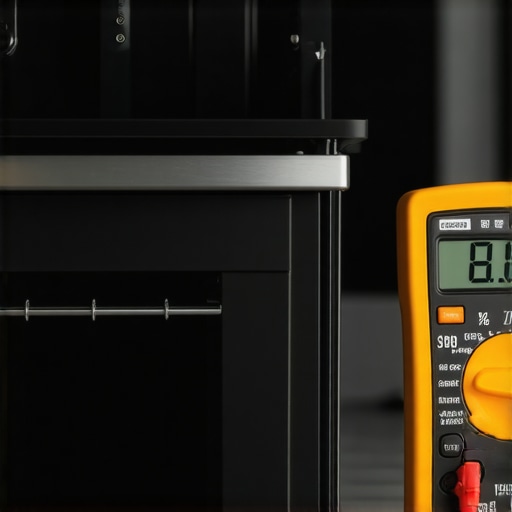
Remember, if the voltage is significantly lower than 120V, the issue likely stems from wiring problems, faulty relay, or the control board. If voltage is present but the igniter isn’t glowing, the igniter itself may need replacement.
Interpreting Your Results for a Fast Fix
If your multimeter shows no voltage, focus on inspecting and potentially replacing faulty relays or control switches. For instance, a bad oven control board can stop voltage from reaching the igniter, a problem you can troubleshoot by testing the relays or switching components. Conversely, if voltage is present but the igniter doesn’t glow, it’s time to replace the igniter—often a simple and affordable fix. For tips on choosing the right parts, check this guide on oven igniter replacement. Be cautious during testing, and always ensure power is off before disconnecting wiring to avoid shocks. Proper voltage testing can save you hours of unnecessary replacements and expenses.Many DIY enthusiasts believe that replacing parts at the first sign of trouble is the best way to fix appliances, but this isn’t always true. In fact, a prevalent misconception is that parts like igniters or dishwasher pumps are the primary causes of failure, whereas often the root lies in wiring issues, control boards, or sensors that are overlooked. For example, a faulty oven sensor can give false readings, leading to unnecessary part replacements; understanding these nuances distinguishes an amateur from a seasoned repairer. An often overlooked trap is ignoring safety protocols during diagnostics, such as not unplugging the appliance before inspecting or testing voltage; this can lead to electrical shocks or further damage. Advanced diagnostics require a systematic approach: verify power supplies, inspect control components, and use proper testing tools like multimeters correctly. According to appliance repair experts, nearly 60% of appliance failures stem from wiring or control systems rather than the parts themselves, emphasizing the importance of thorough diagnostics rather than part replacement alone. Experts also warn against blindly trusting myths like “the most expensive part is always the culprit,” which can lead to costly errors. Instead, focus on testing and elimination. Have you ever fallen into this trap? Let me know in the comments. For instance, if your dishwasher isn’t stopping filling, the issue might not be the inlet valve but a defective float switch or wiring, which can be diagnosed by inspecting the [float switch and wiring connections](https://appliancebargainz.com/dishwasher-wont-stop-filling-4-parts-to-inspect-in-2026). Similarly, understanding that control boards are often the hidden culprits in oven errors can save you money and time, as detailed in our guide on [control board diagnostics](https://appliancebargainz.com/3-control-board-tests-to-fix-a-dead-dishwasher-in-2026). Remember, the key to effective appliance repair isn’t just replacing parts—it’s diagnosing the true cause with nuance and expertise.
Investing in Quality Tools for Reliable Repairs
One of the most critical aspects of maintaining your appliances over time is having the right tools. I personally swear by a high-precision digital multimeter; it allows me to measure voltage and resistance accurately, ensuring my diagnostics are spot-on before replacing any parts. For example, when diagnosing a dishwasher that isn’t draining, a good multimeter helps confirm whether the solenoid valve is receiving power, saving me from unnecessary replacements. Additionally, a magnetic-tip inspection mirror enables me to see hidden components behind panels without disassembling everything, which speeds up troubleshooting significantly.
Torque screwdrivers are invaluable for reinstalling panels and securing delicate components without overtightening, preventing future damage. A quality set of nut drivers and precision screwdrivers also speeds up disassembly and reassembly, minimizing the risk of stripping screws. For drain and pump components, I rely on a cordless rotary tool for cleaning or grinding small parts, especially when dealing with mineral build-up or corrosion. Having these tools organized in a dedicated repair kit ensures you’re prepared for most common issues, reducing downtime and frustration.
The Power of Diagnostic Software and Technical Resources
While physical tools are essential, leveraging diagnostic software can elevate your repair game. For example, some modern ovens and dishwashers can be connected to apps that provide error codes and troubleshooting steps. I recommend investing in a reliable Wi-Fi-enabled diagnostic device compatible with your appliances, which helps interpret electronic signals and sensor outputs. Pairing this with detailed service manuals—often available through manufacturer websites—gives you a comprehensive understanding of the appliance’s inner workings.
Regularly updating your knowledge base with online tutorials and community forums, like appliance repair subreddits, keeps you aware of evolving technology. For specific issues, such as a dishwasher that continues beeping during cycles, consulting expert guides like those found at this resource provides step-by-step procedures that save guesswork.
Routine Maintenance to Extend Appliance Lifespan
Establishing a maintenance routine can significantly improve the long-term performance of your oven and dishwasher. Regularly inspecting and cleaning spray arms, filters, and inlet valves prevents debris buildup that can impair function. For dishwashers, cleaning the filter and checking for clogging in spray arms ensures optimal cleaning efficiency, as outlined in this guide. For ovens, testing and calibrating temperature sensors annually helps maintain accurate heat, reducing uneven baking issues.
Replacing worn-out components like door seals or hinge springs before they fail entirely prevents expensive repairs or replacements. A proactive approach might involve monitoring stove surface burners or oven elements for signs of corrosion or uneven heating. Applying these routine checks and part replacements based on manufacturer recommendations can extend the lifespan of your appliances considerably.
How do I keep my appliances running smoothly over the years?
Consistent inspections, timely part replacements, and use of proper diagnostic tools are key. For example, ensuring your oven’s temperature sensor is functioning correctly can prevent cooking issues down the line. Remember, having a reliable multimeter and staying informed through expert resources are your best allies in these efforts. In fact, consulting technical documentation, like the oven’s circuit schematic available on manufacturer support sites, can drastically improve repair accuracy. Try implementing a monthly inspection schedule for critical parts—this simple step can save you from unexpected breakdowns, saving money and hassle over time.
What I Wish I Knew When I Started Fixing Appliances
One of my toughest lessons was realizing that not every issue is what it seems. For example, an oven that won’t ignite might have nothing to do with the igniter itself—sometimes, control boards or wiring are the real culprits. This insight pushed me to develop a more systematic diagnostic approach, focusing on voltage testing and visual inspections before jumping into replacements. Remember, patience and curiosity often lead to the best solutions, saving you both time and money.
Tools and Resources That Changed My Repair Game
- Multimeter with True RMS: Accurate voltage readings are essential. Brands like Fluke provide reliable measurements that turn guesswork into certainty.
- OEM Service Manuals: Official manuals from manufacturers guide you through complex diagnostics step-by-step, making a big difference in tricky cases.
- Online Repair Communities: Forums and social media groups are treasure troves of real-world solutions and shared experiences that can help you troubleshoot effectively.
- Diagnostic Apps and Software: Wi-Fi-enabled tools can interpret sensor outputs and error codes, elevating your troubleshooting beyond basic multimeters.
Harnessing the Power of Consistency and Care in Repairs
Effective appliance repair isn’t just about fixing one issue; it’s about establishing habits that preserve your appliances’ health. Regularly inspecting wiring connections and testing components like sensors or relays helps prevent unexpected breakdowns. Staying organized with a set of reliable tools, and always reviewing manufacturer guidelines, empowers you to perform repairs confidently. Over time, these practices create a cycle of proactive maintenance that keeps your appliances running smoothly, and your skills sharp.
Rachel Thomas
I really appreciate the detailed steps on testing igniter voltage; this approach saves so much guesswork. I remember my first attempt at diagnosing an oven issue—I replaced the igniter without checking the voltage, only to find out the problem was actually a faulty relay. It taught me an important lesson about the importance of systematic diagnostics. For those doing this at home, do you have any tips on quickly identifying wiring issues, or should we always lean on visual inspections before testing voltage? I’ve found that sometimes burnt or loose wires can cause inconsistent voltage readings, which might confuse newcomers. Also, using a multimeter with True RMS has made my troubleshooting much more reliable. How do others ensure they don’t overlook wiring problems during their diagnostics? Would love to hear some pro tips or experiences to refine this process further.