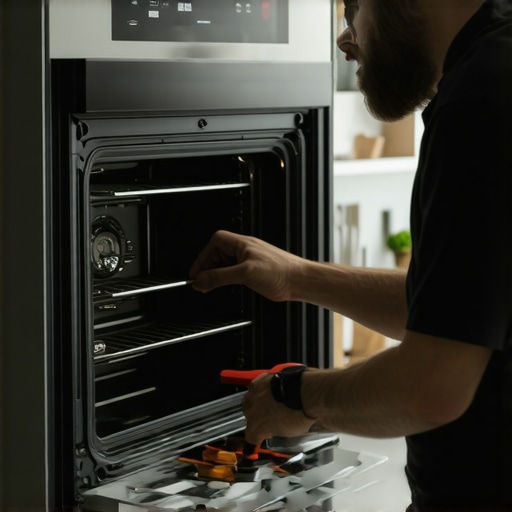
I’ll never forget the frustration of my first real oven breakdown. There I was, in the middle of preparing dinner, when my oven refused to heat. It was a cold night, and I felt helpless. That lightbulb moment made me realize something — diagnosing top oven issues quickly can save time, money, and a whole lot of stress. If you’ve ever been stuck staring at a dead oven, you know exactly what I mean. But here’s the good news: with a few insider tips and smarter diagnostics, you can get your oven back in action faster than ever, especially in 2025, when technology makes repairs more straightforward than before. Today, we’re going to walk through proven strategies to identify and fix your oven issues promptly. Whether you’re a seasoned DIYer or just getting started, these insights will boost your confidence and skills.
The Power of Accurate Diagnostics
Getting to the root of oven problems isn’t just guesswork. It involves understanding the key parts and how they interact. Early in my repair journey, I made the mistake of replacing parts blindly, wasting time and cash. That taught me a valuable lesson: effective diagnostics are the foundation of a faster fix. In 2025, there are innovative diagnostic tools and techniques that make troubleshooting more efficient. For example, knowing how to test heating elements, thermostats, and control boards can drastically cut down your repair time. I strongly recommend exploring effective oven repair diagnostics strategies in 2025 to stay ahead of common issues. With a clear diagnostic plan, even complex failures become manageable, saving you from unnecessary guessing and repeated errors. Next, let’s address one of the most common doubts new DIYers have: is diving into oven diagnostics really worth the effort? Mark my words, understanding the ‘why’ behind the malfunction transforms a frustrating experience into a satisfying success.
Test the Heating Element with Precision
Picture this: your oven isn’t heating, and you suspect the heating element. The first step is to disconnect the power and access the element. Using a multimeter set to ohms, touch the probes to the terminals. If the reading is infinite or very high, the element has a break—think of it like a broken wire in a lamp, rendering the connection useless. I once tested an oven’s heating element after a misdiagnosis led me to replace a control board unnecessarily. The multimeter revealed a busted element, saving me money and time. For reliable results, ensure your multimeter is calibrated—imagine trying to tune a guitar with a misaligned tuner; accuracy matters. Explore diagnostics key parts for faster fixes in 2025 to deepen your understanding of essential components.
Assess Thermostats Effectively
The thermostat acts like the oven’s brain, regulating temperature. To test it, first locate the thermostat, usually behind panels or at the oven’s back. Disconnect the wires and set your multimeter again to continuity. Touch the probes across the thermostat’s terminals; a reading of continuity indicates it’s closed, functioning correctly. No continuity suggests it’s faulty—a common culprit in heating issues. I once replaced a thermostat based solely on temperature complaints, only to find it was functional. The real culprit was a defective temperature sensor. Just like a trip sensor in a car, if the thermostat doesn’t send the right signals, the oven won’t heat. Watching effective tips in 2025 can help streamline this process.
Inspect Control Boards Carefully
The control board is akin to the command center—it orchestrates heating cycles, timers, and displays. Visual inspection is your first step: look for burnt components, bulging capacitors, or scorched areas. If physical damage is present, the board is likely dead. For a more precise diagnosis, use a multimeter to check the outputs and continuity of the control signals. I once encountered an oven that refused to turn on; testing the relay on the control board with a multimeter revealed a burnt-out relay coil. Replacing it restored full functionality. Remember, control boards are sensitive; handle with care, and avoid static shocks. For detailed diagnostics, check effective fix strategies in 2025 that include control board testing.
Validate Power Supply Correctly
An often-overlooked step is confirming proper power supply. Use a multimeter set to AC voltage to test the outlet, ensuring it delivers 120V or 240V as needed. Think of it like checking if a phone charger actually provides power before trying to charge. I once spent hours troubleshooting a non-heating oven only to realize the outlet was malfunctioning. If the power supply is inconsistent, all other components can malfunction or appear faulty. In complex cases, test the internal wiring, fuses, and circuit breakers. Use expert strategies for diagnostics in 2025 to methodically verify power issues.
Follow a Diagnostic Flowchart for Clarity
Organize your troubleshooting with a flowchart—like a decision tree guiding you through possible causes. Start by confirming power, then test heating elements, thermostats, control boards, and wiring sequentially. This approach saves time and prevents random part replacements. I recall drawing my own flowchart with notes, which kept me focused during a complex repair; it turned out the relay controlling the heating element was faulty, a detail I might have missed otherwise. By systematically narrowing down issues, you’ll become more confident. For further guidance, review essential diagnostic tips for faster fixes in 2025.
Many DIY enthusiasts believe that replacing parts immediately after encountering an issue is the quickest fix, but in my experience, this approach often leads to unnecessary expenses and wasted effort. A persistent misconception is that all oven problems stem from the most noticeable parts, like the heating element or thermostat, when in reality, control boards or wiring issues are often overlooked yet critical components to assess. For example, I once replaced a perfectly functional thermostat, only to find the fault was a faulty control board connection—an oversight that cost me time and money. It’s essential to realize that diagnosing oven issues requires a nuanced understanding of how components interact, rather than a shotgun replacement method. This is especially true as technology advances; modern ovens increasingly rely on smart control systems, making traditional troubleshooting less effective without proper knowledge. Expert diagnostics in 2025 emphasize systematic testing of all potential failure points, such as wiring harnesses and control modules, before swapping parts. Rushing into part replacement based on assumptions is a common trap; instead, comprehensive testing can dramatically improve your repair success rate. The same logic applies to dishwashers, where misdiagnosing a faulty pump without verifying electrical signals can lead you astray. To deepen your diagnostic skills, I recommend exploring effective repair strategies in 2025. Remember, the goal isn’t just to fix it once but to understand *why* it failed, so you can prevent future problems and save money in the long run. Have you ever fallen into this trap? Let me know in the comments, and share your own lessons learned with oven diagnostics. For more advanced insights, reviewing diagnostics parts and techniques can elevate your repair game.
Maintaining your appliances beyond initial repairs is key to ensuring their longevity and consistent performance. As someone deeply involved in appliance diagnostics, I recommend investing in high-quality, reliable tools that facilitate accurate diagnostics and safe repairs. A digital multimeter, for instance, is indispensable for testing electrical components like thermostats, control boards, and wiring continuity. I personally prefer a multimeter with auto-ranging capability and a data hold function, such as the Fluke 115, because it minimizes guesswork and allows for precise readings in tight spaces. Additionally, a non-contact voltage tester is a must-have for verifying power supply safety before beginning any repair—it’s a quick and non-intrusive way to confirm live circuits, reducing risk.
For more complex diagnostics, I utilize a thermal camera, like the FLIR ONE, which connects to my smartphone. This device is particularly handy for identifying uneven heating in ovens or detecting overheating components in dishwashers before they fail completely. The predictive insights provided by thermal imaging help me perform proactive maintenance, preventing unexpected breakdowns. I also rely on specialized appliance repair software, which logs diagnostic results and provides step-by-step troubleshooting guides tailored to specific brands and models. These programs streamline the diagnostic process, ensuring I don’t overlook subtle clues that could lead to cost savings.
Long-term results hinge on regular maintenance routines. I recommend creating a schedule to check wiring connections, clean sensors, and test heating elements periodically. For example, inspecting the oven’s temperature sensor with your multimeter and cleaning its casing ensures consistent temperature regulation. When maintaining dishwashers, inspecting spray arms, filter screens, and seals prevents water circulation issues that can lead to malfunctions. This proactive approach not only extends appliance lifespan but also improves energy efficiency and safety.
Looking ahead, I predict that advanced diagnostic tools incorporating AI and machine learning will become more integrated into appliance repair workflows. These innovations could analyze sensor data in real-time, alerting homeowners and technicians to potential problems before they manifest. As technology evolves, staying updated with these tools and techniques will be crucial.
How can I keep my appliances running smoothly over time
One of my top strategies is to implement a routine check of critical components using diagnostic tools. For example, setting a monthly reminder to test heating elements and clean sensors with simple tools like multimeters and brushes can catch issues early. Remember, the key to effective long-term maintenance is consistency—early detection often prevents costly repairs down the line. For practical guidance, review effective oven repair tips and diagnostics in 2025. I encourage you to try calibrating your multimeter today to ensure accurate readings; this small step enhances your diagnostic precision and confidence in resolving appliance issues.
The Hardest Lesson I Learned About oven repair,dishwasher,parts,diagnostics
One of the biggest surprises I encountered was realizing that many seemingly straightforward issues have obscure root causes. For example, I once replaced a heating element only to find the real problem was a tiny, overlooked wiring connection corrosion. This taught me that meticulous inspection often reveals hidden faults, saving time and money.
Why Assumptions Can Lead You Astray in Oven Diagnostics
I used to jump straight to parts replacement based on symptoms without comprehensive testing, leading to unnecessary expenses. Learning to question my assumptions and perform systematic diagnostics transformed my repair success rate. It became clear that understanding the entire system, including control boards and wiring, is key to effective troubleshooting.
The Power of Combining Tools with Knowledge
Relying solely on tools without deep understanding can be misleading. Investing time to learn how to interpret multimeter readings or sensor outputs has paid off immensely. Pairing quality diagnostic tools like the Fluke 115 multimeter with ongoing education, such as tutorials on effective oven repair diagnostics in 2025, empowers me to diagnose complex faults confidently.
Where to Go from Here
If you’re eager to elevate your oven repair skills, start by exploring reliable diagnostic methods and updating your toolkit. Remember, consistent practice and continual learning are your best allies. For comprehensive strategies, check out key parts for faster fixes in 2025 to stay ahead of common issues. Don’t let fear or uncertainty hold you back—every successful repair boosts your confidence and knowledge.
Embrace the Journey and Keep Learning
Ultimately, mastering oven diagnostics is about persistence and curiosity. Every challenge you face is an opportunity to grow. Share your experiences below—what unexpected hurdle taught you the most in your repair journey? Your insights could inspire others to become more self-reliant and confident in their appliance repairs.
Emily Johnson
Reading through this detailed guide on oven diagnostics really made me reflect on my own repair mistakes. I used to replace parts based solely on symptoms, especially the heating element, without testing the control board or wiring first. It was a costly lesson that taught me the importance of systematic troubleshooting. I found that having a reliable multimeter and actually understanding how to interpret the readings can save a lot of time and money. One thing I’ve started doing lately is using a thermal camera to spot uneven heating, which often points to underlying wiring or sensor issues that are easily overlooked. Have others experimented with thermal imaging in their repairs? I’m curious if it’s as effective as it looks for pinpointing hard-to-find faults. Also, I wonder how many times we might jump straight to swapping parts when a thorough diagnostic could reveal a simpler, less expensive fix. Would love to hear others’ experiences with diagnostic tools versus quick part swaps.