Ever been in the middle of a dishwasher cycle, watching your machine work its magic, and suddenly hear that faint, unsettling clicking sound? That strange noise often signals a problem with the vent system, and more times than not, it’s the wax motor at fault. I remember the first time I encountered this; I was convinced my dishwasher was about to give up the ghost. The frustration of a dishwasher that refuses to vent properly can be maddening, especially when you’re eager to get those dishes done and out of the way.
But here’s the thing: a malfunctioning wax motor isn’t the end of the world. In fact, it’s a common issue that many homeowners can diagnose and fix themselves with a bit of patience and the right guidance. Today, I want to share my journey—what I learned and how I managed to replace that stubborn wax motor on my dishwasher vent. Trust me, it’s more straightforward than you’d think, and once you get that vent working again, you’ll breathe a sigh of relief.
Why Replacing the Wax Motor Matters and When to Hop In
The wax motor plays a crucial role in regulating your dishwasher’s vent, which controls moisture and steam escape. If it fails, steam can build up inside, leading to potential damage or persistent odors. Plus, a faulty wax motor can cause your dishwasher to run longer or stop mid-cycle, leaving you with a partially cleaned batch of dishes. Recognizing the importance of this tiny component early can save you money and prevent bigger repairs down the line.
So, how do you know if your wax motor is the culprit? Well, I learned the hard way that assuming other parts are the problem without proper diagnosis can lead to unnecessary expenses. One mistake I made initially was replacing the vent cover without checking the motor—an easy trap for beginners. For reliable advice and thorough diagnostics, I recommend visiting trusted resources, such as this guide to get started.
Before diving into the repair, ask yourself: Has your dishwasher been a bit sluggish to vent, or does it seem like it’s holding onto steam? If so, chances are, that wax motor isn’t doing its job. I’ll walk you through the steps soon, but first, let’s tackle those common doubts and fears that might hold you back.
Disconnect Power and Access the Vent System
Before any repair, ensure safety by unplugging your dishwasher or turning off the circuit breaker. Locate the vent area, usually at the top of the dishwasher’s front panel or internal. Remove the panel carefully, using a screwdriver, keeping track of screws to prevent loss. As I did during my first repair, use a flashlight to see clearly and prepare for detailed work.
Identify and Remove the Faulty Wax Motor
The wax motor resembles a small, cylinder-shaped device connected with wires. It’s mounted near the vent; sometimes it’s hidden behind insulation or ducting. Carefully disconnect the wires by pressing on the clips. To remove the motor, unscrew any mounting brackets. Remember, I once mistakenly pulled at the wires first—so double-check your hold on the motor itself to avoid damage.
Diagnose the Motor Before Replacement
Test the wax motor if you have a multimeter. Set it to continuity mode and check if the motor’s coil is intact. If there’s no continuity, replacement is necessary. I once replaced a motor that tested fine, leading to unnecessary work—so always verify with proper diagnostics.
Install the New Wax Motor
Take the new wax motor and connect the wires securely. Align it with the mounting bracket and screw it into place firmly, avoiding over-tightening which can damage the plastic. Reconnect any ducting or insulation removed earlier. Think of this step like replacing a fuse in a circuit—precise and careful connection ensure reliable operation.
Reassemble and Test
Replace the vent cover and reattach the panel, securing all screws. Restore power and run a short cycle to verify that the vent opens and closes correctly, listening for that familiar click. During my last repair, I noticed the vent engaged smoothly after replacing the motor, confirming success.
Additional Tips for a Smooth Repair
Use a container or cloth to catch any residual water or debris. Keep spare parts organized for quick access. If your dishwasher still exhibits vent issues, revisit diagnostic steps or check other components like the control board. Remember, proper diagnostics save time and help avoid unnecessary replacements, as explained in this spark module guide.
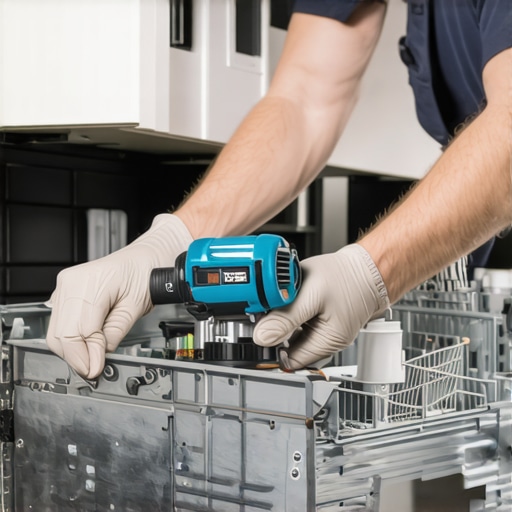 Many homeowners jump into appliance repairs with a set of assumptions that can lead to costly mistakes. For instance, it’s a common belief that replacing a faulty part always fixes the problem, but without proper diagnostics, you might be chasing shadows. One widespread myth is that all control boards are the same, yet subtle differences can make a significant impact on repair outcomes. Advanced diagnostics, like testing oven sensors with a multimeter, reveal issues invisible to the naked eye, highlighting the importance of proper troubleshooting techniques.
A trap I personally encountered was assuming that a noisy dishwasher’s problem was always the pump. In reality, issues with the spray arms or even the circulation motor can mimic pump failure symptoms. Relying solely on visual inspection and ignoring diagnostic tests can lead to unnecessary part replacements. For example, inspecting spray nozzle buildup and cleaning them, as shown in this guide, often solves the problem without extra costs.
Let’s address a tricky question—Why do some repair attempts fail even after replacing seemingly faulty parts? The answer lies in understanding the interconnectedness of appliance systems. For example, a dishwasher’s door latch not only secures the door but also signals the control panel to start the cycle. Replacing a latch without ensuring the control panel’s proper operation can result in recurring issues. This is why comprehensive diagnostics are essential before parts replacement, as discussed in this article.
Become aware of common repair traps and misconceptions to avoid throwing money at unnecessary fixes. Proper diagnosis, understanding nuanced system interactions, and leveraging expert guides will make your repair efforts more successful. Remember, rushing into part replacements can do more harm than good. Think smarter, troubleshoot thoroughly, and save yourself time and money. Have you ever fallen into this trap? Let me know in the comments.Maintaining your appliances long-term requires more than just occasional cleaning; it calls for the right tools, a systematic approach, and knowledge of effective troubleshooting techniques. Over the years, I’ve distilled a set of specialized tools and methods that help me diagnose issues quickly and perform repairs confidently, saving both time and money.
One of my favorites is a reliable multimeter, which I use not only for oven thermostats but also for checking continuity in circuits like the dishwasher’s heating elements or the gas oven’s igniter. I prefer a digital multimeter with a hold function and auto-ranging capabilities, like the Fluke 117, because it allows me to capture readings accurately without fuss, especially in tight or cluttered spaces.
For deeper diagnostics, I lean on infrared thermometers to spot uneven heating or verify whether heating elements are functioning properly. This is particularly handy when I suspect a faulty bake element or if the oven takes too long to preheat—an issue often caused by partially broken heating circuits. For precise component testing, I utilize continuity tests as detailed in this guide, which breaks down the process into simple steps.
When it comes to cleaning, a small brush set helps me clear mineral buildup from spray nozzles and vents, ensuring optimal flow and preventing issues like poor dishwashing performance. Regularly inspecting and cleaning these parts can greatly extend appliance lifespan and efficiency.
An often-overlooked but vital tool is a set of manufacturer-specific replacement parts, like the correct oven sensor or dishwasher latch. Having these on hand means I can swap them out promptly rather than ordering last-minute replacements that delay repairs and may compromise the fix.
Looking towards the future, I predict that smart diagnostic devices—such as Bluetooth-enabled sensors—will become more common, providing real-time alerts and detailed diagnostics via smartphone apps. This could revolutionize maintenance routines, making appliance repair more proactive than reactive.
How do I maintain my appliances over time? It all starts with consistent, scheduled inspections and using diagnostic tools to catch issues early. For example, I regularly test oven sensors with a multimeter to ensure they’re within the correct resistance range, as shown here. Incorporating these simple but effective practices keeps my appliances in top shape.
One advanced tip I recommend trying is using an infrared thermometer to verify even heating in your oven. Simply preheat and point the device at different areas, checking if the temperature readings are consistent. Uneven temperatures often point to defective bake or broil elements or faulty sensors, which you can then replace promptly. This approach saves guesswork and ensures your oven performs reliably long-term.
The Hardest Lesson I Learned About Dishwasher Repairs and Diagnoses
One of the most significant insights I gained was the danger of assuming a single faulty part is always the culprit. Early on, I replaced the wax motor relying solely on the noise, only to find the problem persisted. It taught me that thorough diagnostics are essential, and sometimes, it’s a minor wiring issue or control board glitch causing vent problems. Patience and testing, rather than jumping straight into part replacement, save both time and money.
The Myth About DIY Fixes That Held Me Back
I used to think that if I watched a few videos, I could tackle any dishwasher issue. However, I learned that complex systems require more than just surface-level understanding. Relying on simplified tutorials without a solid grasp of the appliance’s inner workings led to unnecessary failures. Now, I focus on consulting reputable guides like this comprehensive spark module guide to improve my diagnostic accuracy.
Recognizing How System Interconnections Affect Repairs
A surprising realization was how interconnected components are. For instance, replacing the vent motor won’t help if the control panel’s relay isn’t functioning properly. Troubleshooting became clearer once I understood that a single repair might uncover other hidden issues. This awareness prevents wasted effort fixing superficial symptoms rather than addressing root causes.
Curated Guides and Tools That Truly Make a Difference
Over time, I’ve found a few tools invaluable, such as a reliable multimeter like the Fluke 117 for checking continuity and resistance. The multimeter testing guide I followed demystified the process. I also keep spare appliance-specific parts handy, like the correct dishwasher latch or oven sensor, so I’m prepared for quick replacements. Lastly, an infrared thermometer helps me pinpoint uneven oven heating, saving guesswork.
Believe in Your Skills: The Power of Consistent Troubleshooting
Mastering appliance repair isn’t about quick fixes; it’s about developing confidence through methodical troubleshooting. I encourage you to start with diagnostic checks, verify parts before replacing, and use trusted resources such as this guide on dishwasher residue. With patience and the right approach, you’ll find that repairing your appliances becomes an empowering skill rather than a daunting chore. What’s the most unexpected repair solution you’ve discovered? Share your story below.