Ever had that sinking feeling when your dishwasher won’t start, and you’re faced with the frustrating reality that the latch might be broken? I remember the moment I opened my dishwasher, hit the start button, and heard nothing but silence. The door was firmly shut, but it felt like my machine was giving me the cold shoulder. That little latch, seemingly a small part, turned out to be the culprit, and honestly, it caught me off guard. I thought, “A simple fix, right?” Well, not quite.
The truth is, a malfunctioning dishwasher latch isn’t just an annoyance; it can prevent your entire appliance from functioning properly. If you’ve been in this situation or suspect your latch might be failing, you’re not alone. Many homeowners overlook this tiny component until it causes a major halt in their routine.
Today, I’m here to walk you through the steps of replacing that pesky latch so you can get back to your dishwashing routine without breaking the bank. Trust me, with a little patience and the right guidance, this is a DIY fix that doesn’t require calling in a pro.
Why It Matters to Fix That Dishwasher Latch Quickly
A broken or faulty latch isn’t just a minor inconvenience—it’s a sign that your appliance might be on the brink of more serious issues if left unaddressed. When the latch won’t engage, your dishwasher may refuse to start altogether because most models won’t operate without a secure door. According to appliance experts, ignoring such signs can lead to leaks or further damage to the door mechanism, which could be more costly to repair. In fact, checking and replacing a simple latch can sometimes prevent a full-fledged replacement of the dishwasher.
If you’re hesitant about whether this is a repair worth attempting yourself, remember that many DIY enthusiasts have successfully performed this fix with just a few common tools. And if you need a hand with related issues, such as tightening loose handles or replacing racks, check out guides like how to tighten a loose dishwasher handle.
But before you dive in, I want to share a quick mistake I made early on: using the wrong replacement part. Make sure to match your latch with the correct model number. Otherwise, you might end up with more troubles—and unnecessary costs.
Are you tired of dealing with a stubborn, unusable dishwasher? Well, you’re in the right place. Let’s get into the practical steps to replace that broken latch and restore peace to your kitchen.
Remove the Old Latch
Start by unplugging your dishwasher to ensure safety. Use a screwdriver to access the door panel, usually by removing screws along the edge. Once the panel is loose, locate the latch mechanism, which is typically secured with screws or clips. Carefully disconnect any wiring harnesses attached to the latch, noting their positions for reassembly. I once worked on my dishwasher and accidentally disconnected the wrong wire, causing confusion—so take a photo during disassembly for reference.
Assess and Choose the Correct Replacement
Before buying a new latch, verify your dishwasher’s model number, often found on a sticker inside the door or on the frame. Match this with the replacement part to avoid compatibility issues. Using the wrong part is a common mistake; I once installed a similar latch only to find it wouldn’t engage properly, leading to a second purchase. For optimal results, purchase your part from a reputable supplier or consult the manufacturer’s guide.
Install the New Latch
Align the new latch with the mounting holes, ensuring it fits snugly. Secure it using the original screws or clips. Reconnect the wiring harnesses, making sure each connector clicks into place. During my last repair, I noticed that ensuring firm connections prevented future malfunctions. Double-check all connections before reassembling the door panel.
Reassemble and Test Your Dishwasher
Reattach the door panel, tightening screws evenly to prevent misalignment. Plug the dishwasher back in, then close the door securely. Test the latch by trying to start a cycle; the door should latch smoothly, and the dishwasher should operate without hesitation. If it still doesn’t start, inspect the latch wiring or explore other issues like the door switch. For stubborn issues, you might need to replace the entire door latch assembly for a more durable fix.
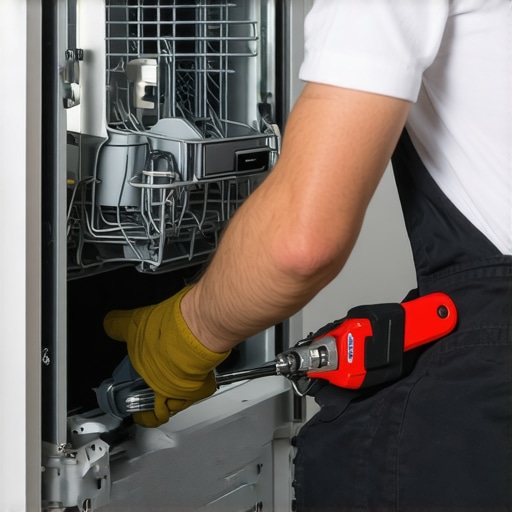 While many homeowners believe that fixing appliances like dishwashers and ovens is straightforward, the reality is often more nuanced. A common misconception is that all repair parts are interchangeable across models, leading to costly mistakes and delayed fixes. In my experience, verifying the specific model number and understanding the subtle differences in part design can save you time and money. For example, a mismatched door gasket can cause leaks even if it fits physically but isn’t sealed properly, resulting in persistent water issues. Moreover, many assume that replacing a single faulty component solves the entire problem, but appliances may have multiple underlying issues—like when a dishwasher stops mid-cycle due to a worn-out circulation pump, which often goes unnoticed until the cycle stalls. According to industry experts, the key to successful repairs lies in precise diagnostics; for instance, using a multimeter to test the thermal fuse or the control board can reveal hidden faults that aren’t visible to the naked eye. One trap to watch out for is focusing only on visible symptoms without testing critical electrical components, which can lead to repetitive repairs or unnecessary part replacements. For advanced repair tasks, understanding the nuances of each component’s function is crucial. For instance, knowing how a convection fan’s bearing wears out over time and causes inefficient heat circulation in an oven helps pinpoint issues more quickly. Curious about how to accurately diagnose a faulty convection fan motor? Check out this detailed guide. When dealing with parts, always ensure compatibility; using a incorrect-size heating element in an oven may seem harmless but can lead to overheating or damage. Also, beware of the “quick fix” mentality—many problems stem from multiple interconnected issues, and addressing just one often leads to recurrent failures.
Understanding these subtleties transforms your approach from guesswork to confident troubleshooting. Have you ever fallen into this trap? Let me know in the comments. Whether it’s mistaking a relay for a resistor or overlooking the significance of a clogged filter, the tiny details make all the difference in appliance repairs. Recognizing these common pitfalls and nuances can significantly extend the lifespan of your appliances, saving you both money and frustration. Remember, DIY repair isn’t just about swapping parts—it’s about understanding the underlying mechanics and electrical systems. For example, if your dishwasher isn’t draining properly, it’s not always the pump—sometimes, the float switch or the hose might be to blame. Always perform comprehensive diagnostics before making replacements, and consider consulting detailed guides for complex issues such as deep cleaning the dishwasher sump. Keep in mind that patience, proper tools, and knowledge are your best allies in avoiding costly mistakes.Ensuring your dishwasher and oven remain in top condition requires more than just occasional fixes—it demands consistent maintenance and the right set of tools. A key aspect of long-term appliance care is regular inspections of electrical connections and moving parts. For instance, using a high-quality multimeter during diagnostics helps identify issues like faulty thermostats or dead motors early on, preventing costly breakdowns. Personally, I rely on a digital multimeter from Fluke because of its accuracy and durability, especially when testing appliance sensors or wiring continuity. Further, investing in a service manual specific to your appliance model can be invaluable, offering detailed troubleshooting steps and part compatibility charts. These manuals often contain wiring diagrams and component layouts that speed up repairs and reduce guesswork. As technology advances, tools like infrared thermometers become essential for quickly pinpointing overheating components or malfunctioning heating elements, saving time and improving diagnostic precision. Looking ahead, I predict that smart diagnostic tools, possibly integrated with IoT-enabled appliances, will dramatically simplify maintenance routines, allowing homeowners to receive real-time alerts about potential issues before they escalate. Nailing down preventive measures today is crucial for sustainable appliance use.
How do I maintain my dishwasher and oven over time? This involves routine cleaning, checking seals and gaskets, and monitoring electrical components using specialized tools. Regularly deep-cleaning your dishwasher’s sump and spray nozzles (see this guide) prevents residue buildup that impairs performance. For ovens, inspecting ignition systems and thermal fuses with a multimeter ensures safety and efficiency. Don’t forget to tighten loose door handles, like the ones discussed here) for optimal sealing. To keep appliances functioning long-term, consider scheduling seasonal checkups, replacing worn parts proactively, and maintaining a clean environment free of dust and moisture. By integrating these maintenance routines, you not only extend the lifespan of your machines but also avoid emergency repairs. I encourage you to try out a digital multimeter for your next diagnostics session—they are affordable and immensely valuable in detecting hidden faults early. As appliance technology continues to evolve, staying equipped with the right diagnostic tools ensures you’re prepared for future innovations and challenges, making DIY repairs more straightforward and less intimidating.3 Lessons That Changed My Approach to Appliance Fixes
First, I realized that rushing into a repair without proper diagnostics often leads to wasted time and unnecessary expenses. Taking the extra moment to test components with a multimeter or inspecting wiring connections saved me from costly mistakes. Second, understanding that many issues stem from interconnected parts shifted my perspective; fixing a door latch might only be a temporary fix if related circuit boards or sensors are failing. Lastly, I learned that patience combined with systematic troubleshooting reveals the root cause more effectively than quick, surface-level fixes, preventing repetitive repairs and extending appliance lifespan.
Tools and Resources That Elevate DIY Repairs
Having a high-quality digital multimeter, like a Fluke, revolutionized my diagnostic accuracy, allowing me to pinpoint electrical faults swiftly. I also swear by model-specific service manuals, which provide detailed wiring diagrams and troubleshooting steps—knowing your appliance’s ins and outs simplifies complex repairs. For professional insights, websites like this resource on convection fans offers valuable guidance. Finally, forums and community groups dedicated to appliance repair are goldmines for shared experiences, tips, and shortcuts that save time and money.
Your Role in Setting Appliance Success in Motion
Embark on your repair journey with confidence—arming yourself with knowledge and the right tools transforms challenges into opportunities for mastery. Remember, addressing issues like a faulty dishwasher latch or oven sensor isn’t just about fixing; it’s about understanding your appliances deeply, which empowers you to maintain them proactively and prevent future problems. So, why wait for another malfunction? Dive into diagnostics, explore tutorials, and turn appliance repairs into rewarding DIY adventures. What repair challenge are you most eager to conquer next? Let me know below and share your experience with replacing appliance parts or troubleshooting tricky issues.