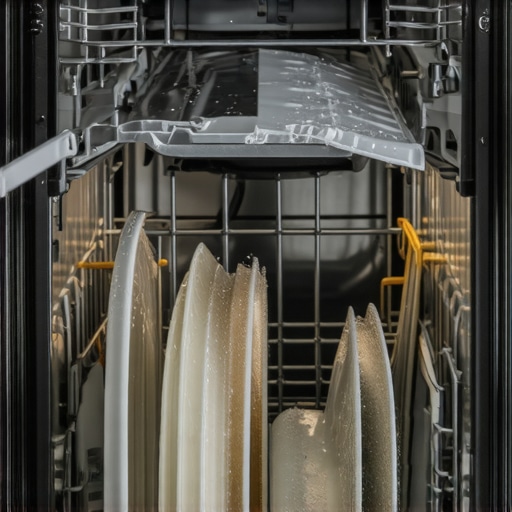
One evening, I opened my dishwasher, expecting sparkling, dry dishes. Instead, I was greeted with damp, stubbornly wet plates that refused to dry. Frustration bubbled up—why was this happening again? It was a lightbulb moment for me, realizing that even minor issues with the heating element can silently sabotage the drying cycle. If you’ve ever faced a similar disappointment, you’re not alone. That helpless feeling when your dishwasher leaves dishes damp is more common than you’d think. But here’s the good news: with the right checks, you can diagnose and fix the problem without calling a costly technician.
Why Your Dishwasher’s Drying Function Fails and How to Fix It
Understanding the core reason behind poor drying starts with the heating element. Basically, it heats water during the wash and then dries the dishes with warm air. If that heating element isn’t working properly, your dishes will never reach the optimal dryness. Early in my troubleshooting journey, I made a crucial mistake—assuming the problem was with the door seal or vent alone, only to find out that the heating element was dead. That misstep delayed my repair and cost me time and money. So, I want to help you avoid that same mistake. In this post, we’ll walk through four simple heating element tests to determine if yours is the culprit. Want to dive deeper into appliance diagnostics? Check out this comprehensive guide on effective dishwasher troubleshooting parts.
Is Testing the Heating Element Really Important?
Absolutely. The heating element’s role is paramount in the drying process. Modern dishwashers are designed with sensors that monitor temperature, and if the heating element is faulty, these sensors may prevent the drying cycle from running effectively. Skipping these tests can lead you to replace parts unnecessarily or overlook the real issue. I remember rushing to replace components before proper testing, only to find out I’d wasted money on unnecessary repairs. Trust me, taking the time to perform these simple tests will save you headaches and expense. For a full breakdown of other common parts involved in dishwasher drying failures, you can explore this detailed troubleshooting article. So, are you ready to test your heating element and solve the drying dilemma once and for all? Let’s get started.
Turn Off Power and Access the Heating Element
Before starting any diagnostics, unplug the dishwasher to ensure safety. Remove the lower spray arm and the access panel beneath the door to expose the heating element, which looks like a coiled metal rod. I remember the time I accidentally touched a hot wire, so double-check that the appliance is disconnected. Carefully disconnect any wires connected to the element, noting their positions for reassembly. Think of this step like disconnecting a battery in a car—always prioritize safety.
Test the Heating Element with a Multimeter
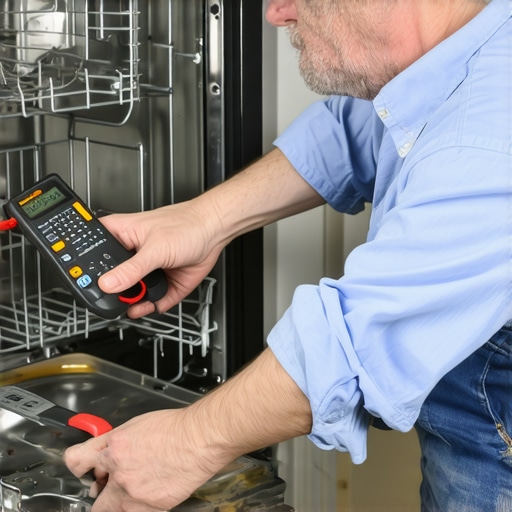
Use a multimeter set to the ohms (Ω) setting to check for continuity across the heating element terminals. Place the probes on each terminal—if the multimeter shows a reading close to zero or infinity, the element is faulty. I once mistakenly tested with the probes reversed; it didn’t affect the reading but reminded me to follow standard procedures. This test is akin to checking if a light bulb is blown—simple but effective.
Verify Resistance Values and Replace if Necessary
Consult your dishwasher’s manual to find the correct resistance value for the heating element. If your reading significantly deviates, it signals a break in the circuit. I learned this the hard way when I replaced a perfectly fine-looking element, only to realize I hadn’t tested resistance properly. Always compare your readings to the manufacturer’s specifications; if out of range, it’s time for a new part.
Check the Thermostat and Temperature Sensors
The thermostat controls the heating element, so test it similarly with a multimeter. Remove the sensor and measure its resistance; a reading outside the recommended range indicates failure. Think of the thermostat like a thermostat in a home—if it’s broken, temperature regulation fails. I once replaced a heating element only to find the drying cycle still failed—that’s when I discovered the sensor was dead, and testing prevented unnecessary replacements.
Examine Wiring and Connections for Damage
Inspect all wires connected to the heating element and thermostat for corrosion, burns, or disconnections. Loose or damaged wiring can mimic a faulty component. I recall a time when a loose wire prevented the heating element from energizing; after tightening the connection, the dishwasher dried like new. Think of wiring as the nervous system—if compromised, the whole process fails.
Test the Dryer Function with a Functionality Check
After reassembly, run a short cycle to observe if the heating element heats up. Use a laser thermometer to verify the temperature increase on the dishes or the element itself. I once skipped this and ended up with wet dishes again, revealing a faulty relay that wasn’t tested earlier. Testing the entire drying system holistically ensures no step is overlooked.
For comprehensive diagnostics on other parts involved in drying problems, explore this effective dishwasher troubleshooting guide. If your tests confirm the heating element is working, but drying still fails, the issue might be with the vent or fan—check out diagnostics for other drying components.
Many beginners assume that appliance issues boil down to simple component failures, but in my experience, this oversimplification often leads to costly misdiagnoses. A prevalent myth is that replacing parts based solely on visual inspection saves time; however, many components can look intact yet still be faulty. For example, a heating element may appear unbroken but fail to conduct electricity due to microscopic fractures or corrosion in internal wiring, which are invisible to the naked eye. Advanced diagnostics, like using a multimeter to test resistance, are crucial but often overlooked, leading folks to replace parts unnecessarily, as detailed in this comprehensive troubleshooting guide.
Another misconception is that all failures are straightforward and easy to diagnose; in reality, many issues involve nuanced interactions between multiple parts, sensors, and control boards. For instance, a dishwasher not filling with water might be mistakenly attributed to a faulty inlet valve when, in fact, a defective door latch or a clogged filter could be the culprit. Recognizing these nuanced interactions requires a deeper understanding of appliance schematics and common failure patterns. This is exemplified in expert analyses, which emphasize testing each component individually rather than assuming a single fault.
A common trap many fall into involves ignoring the importance of the wiring harness. Damaged or loose connections can mimic failed parts, yet are often overlooked because they are subtle to detect. For example, a loose wire behind the control panel might disrupt signals and cause the appliance to malfunction intermittently. To avoid such pitfalls, thorough visual inspections combined with electrical testing are recommended, as outlined in this diagnostic guide.
Now, for the more advanced enthusiast—have you ever wondered why some diagnostic tests seem to provide conflicting results? It turns out that certain sensor readings can be misinterpreted if not compared against manufacturer specifications, leading to incorrect conclusions. For example, a thermostat might test fine resistance-wise but still fail to regulate temperature properly due to calibration issues. To master these nuances, studying technical service bulletins and employing systematic diagnostic procedures is vital. Experts like appliance technicians recommend combining multiple tests—visual, electrical, and functional—to arrive at accurate diagnoses, which you can learn more about in this detailed guide.
Understanding and avoiding these common misconceptions and traps can save time and money, turning appliance repair from guesswork into a strategic process. Do you have stories where a simple fix turned out to be something more complex? Share your experiences below!
How do I maintain my appliance over time?
Regular maintenance is key to ensuring your oven, dishwasher, or other home appliances continue performing optimally. Investing in the right tools can save you time and money in the long run. For instance, I always keep a high-quality multimeter handy—it’s indispensable for diagnosing electrical issues in dishwashers and ovens. A reliable multimeter allows me to quickly check components like heating elements, thermostats, and sensors without needing to call in a technician. Similarly, a digital infrared thermometer helps verify whether heating parts are functioning correctly, providing quick insights during troubleshooting. These tools have become staples in my repair kit, enabling faster diagnosis and more effective repairs.
Predicting future trends, I believe that smart diagnostic tools integrated with mobile apps will become more prevalent, making appliance maintenance even more accessible for homeowners. Imagine being able to run a diagnostic check via your smartphone and receive step-by-step repair guidance—this will revolutionize DIY appliance care.
Essential tools I’ve personally relied on include:
- Multimeter: For electrical diagnostics, I prefer a digital multimeter that offers auto-ranging features. It simplifies testing resistance, voltage, and continuity across various components, reducing the risk of errors and speeding up the troubleshooting process. For more detailed testing techniques, this comprehensive troubleshooting guide offers valuable insights.
- Infrared thermometer: This helps me quickly assess whether heating elements or sensors are functioning properly by measuring surface temperatures without contact. It’s especially useful when diagnosing issues in ovens or dishwashers where internal components aren’t easily accessible.
- Service mirror and small flashlight: For inspecting hidden areas, such as behind panels or beneath appliances, these simple tools help identify corrosion or damage to wiring and connectors that could be causing intermittent faults.
Implementing a routine maintenance schedule
Take a proactive approach by cleaning filters, inspecting seals, and checking electrical connections periodically. Regularly updating yourself with diagnostic techniques and investing in reliable tools ensures your appliances stay working efficiently longer. As technology advances, integrating smart diagnostics into your routine will become even more beneficial, enabling quick identification of potential issues before they escalate. To learn more about diagnosing other appliance components, explore this expert repair strategy. Don’t forget—practical, precise tools paired with routine care can extend your appliance’s lifespan and save significant repair costs over time.
Top Mistakes That Almost Cost Me a Kitchen Disaster
One vital lesson I learned was the danger of rushing repairs without proper diagnostics. I once replaced the heating element only to find the drying cycle still failed, leading me to discover a faulty sensor I hadn’t tested. Patience and systematic troubleshooting are essential to avoid costly missteps.
The Surprising Power of Deep Understanding
Early in my journey, I believed that visual inspection was enough to diagnose appliance issues. However, I realized that understanding how each component interacts, especially wiring and sensors, can reveal hidden faults. This deeper knowledge transforms guesswork into confidence, saving time and money.
My Personal Strategy for Long-Term Success
Regularly updating my toolkit—including a multimeter and infrared thermometer—has made all the difference. These tools provide quick, accurate insights, enabling me to diagnose issues effectively. Investing in learning how to use them has been a game-changer for my repair skills.
Curated Resources That Changed My Approach
- Effective Dishwasher Troubleshooting Guide: A comprehensive source that helped me understand complex diagnostics in detail. Trustworthy because it combines practical steps with theoretical insights.
- Online Forums and Communities: Platforms where experienced technicians share real-world tips. They offer invaluable advice and help me stay updated on emerging appliance issues.
- Technical Service Manuals: Official manuals from manufacturers that provide precise resistance values and diagnostic procedures. A must-have for any serious DIY enthusiast.
Keep Your Courage Alive and Your Repairs Effective
Taking on appliance repairs can be intimidating, but remember that each successful fix builds your skills and confidence. Embrace the learning curve, and don’t be afraid to delve into diagnostics to uncover real issues. The more you learn, the more self-reliant you become—making repairs less daunting and more rewarding.
Have you ever uncovered a hidden fault during troubleshooting that surprised you? Share your story below and let’s learn together!