Ever had that sinking feeling when your oven stops working right before a big dinner? I remember the first time I faced this nightmare—everything seemed fine until I turned on the oven, and nothing happened. It was frustrating, a real lightbulb moment that I needed to understand the ins and outs of oven repair. Now, I want to share how I tackled those issues and how you can too, without calling in a pricey technician every time something goes wrong. Today, we’re diving into the essentials of troubleshooting common oven problems and identifying the parts that might be causing the trouble. Whether it’s heating issues, faulty timers, or broken thermostats, I’ll walk you through it step-by-step, saving you time and money. Are you fed up with guessing what’s wrong with your oven? Let’s fix that.
Why Your Oven Might Fail When You Least Expect It
Troubleshooting oven issues isn’t just about fixing a broken appliance; it’s about understanding what’s happening behind the scenes. A faulty heating element, a malfunctioning thermostat, or even a blown fuse can leave you staring at a cold oven when you need it most. I learned early on that many oven problems are surprisingly simple to diagnose once you know what to look for. The key is to avoid jumping straight to replacing expensive parts without a clear idea of the cause. According to Appliance Repair Experts, many common oven failures can be resolved with basic diagnostic skills and a few affordable parts. But let’s be honest—making that initial mistake of replacing a part without proper testing can be costly and frustrating. I once replaced a thermal fuse only to find the oven still wouldn’t heat—turns out, I missed a faulty relay.
Is DIY Oven Repair Really Worth the Effort
I get it—you’re probably thinking, “Isn’t this just complicated and risky?” Well, I started out just like you, hesitant and a little scared. But I found that with patience, some basic tools, and a good guide, most oven issues are manageable. My advice? Learn to identify the common problems and the parts involved. Check out resources like this guide for diagnostics, and you’ll see how much you can handle yourself. Early in my journey, I mistakenly thought every issue meant replacing the entire oven—that’s a rookie mistake. But understanding the function of parts like heating elements and control boards changed everything. It’s all about knowing what each part does and how to test it properly.
Now, are you ready to roll up your sleeves and troubleshoot your oven like a pro? Let’s get started with the basics that will make your repair efforts smoother and more successful. Stay tuned for the step-by-step process to pinpoint those faults and get your oven baking again in no time.
Test the Heating Element Directly
To start diagnosing, I recommend checking the heating element, which is like the oven’s main heater. Turn off the oven and unplug it. Remove the back panel or the bottom panel inside the oven to access the heating element. Carefully disconnect the wires and take out the element. Use a multimeter set to resistance (ohms) to test continuity. Place the probes on the two terminals. If the multimeter shows no continuity or infinite resistance, the element is broken and needs replacing. I once had a stubborn oven that refused to heat, and after testing the element, I found it was completely burnt out. Replacing it fixed the problem instantly. For a visual guide on testing parts, check out this resource. 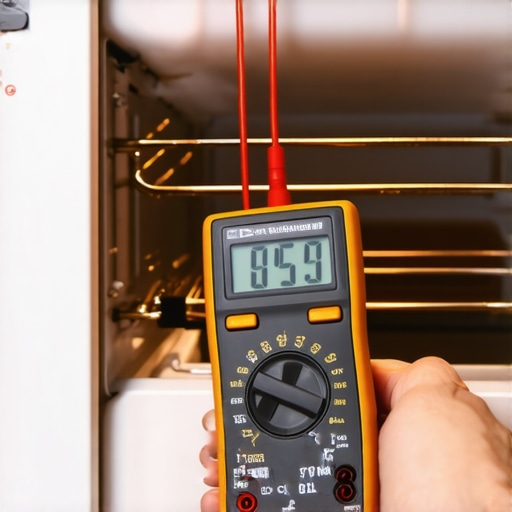 Many DIY enthusiasts believe that replacing faulty parts is the ultimate solution for oven problems, but in reality, this approach often leads to unnecessary expenses and frustration. One common misconception is that if an oven isn’t heating, the issue must be with the heating element. While this is frequently true, some overlook other critical components such as the oven’s thermostat or relay switch, which can be the real culprits. For example, a faulty thermostat can send incorrect signals, causing the oven to either underheat or not heat at all, and replacing the element alone won’t fix the problem. To truly master oven troubleshooting, it’s essential to understand the nuanced roles of each part and how they interact within the system. According to appliance repair experts, many advanced issues stem from control boards or sensors that require more sophisticated diagnostics beyond simple visual inspections or multimeter tests. Relying solely on replacing parts without comprehensive testing can trap you into a cycle of guesswork and wasted money. Instead, learn to use diagnostic tools effectively, such as oven-specific test modes or multimeter-based testing of relays and sensors, which can reveal hidden faults before committing to part replacements. Have you ever fallen into this trap? Let me know in the comments.When you’re deep into troubleshooting or even just maintaining your oven, having the right tools can make all the difference. I personally rely on a few key pieces of equipment that have saved me time and frustration over the years. First and foremost, a good digital multimeter is indispensable. I prefer models like the Fluke 117 because they provide accurate readings, are durable, and have a backlit display for working in tight or poorly lit spaces. Using a multimeter, I can quickly test elements, thermostats, relays, and wiring continuity, ensuring I pinpoint issues correctly without guesswork. Without a multimeter, troubleshooting becomes a game of trial and error, which is inefficient and costly.Ever faced the cold shoulder of your oven just when dinner time looms? My experience taught me that understanding the real causes behind oven failures can save time, money, and a lot of frustration. The key is to approach repairs with a diagnostic mindset rather than jumping straight to part replacements. By mastering simple tests like checking the heating element with a multimeter and understanding the roles of thermostats and relays, you can often fix common problems yourself. Remember, a well-equipped toolkit and patience are your best allies. Don’t let fear hold you back—repairing your oven can be straightforward once you know what to look for and how to test each component effectively.