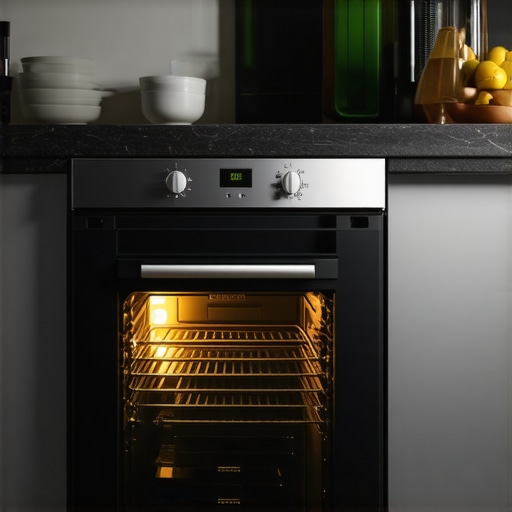
Ever reached into the oven expecting a warm glow and been met with silence? I can’t count how many times I’ve stared in disbelief at a completely cold oven during family dinners or holiday baking marathons. That frustrating moment—knowing the meal is on the line and realizing your trusty oven isn’t cooperating—feels like a personal failure. But here’s the truth: even the best appliances need a little TLC, and sometimes, a simple fix is all it takes to restore that comforting heat.
Reclaim Your Oven’s Warmth Before the Holidays
Is Fixing Your Oven Really Worth the Hassle?
I used to think these problems were complex, requiring expensive repairs or replacing the entire unit. Early on, I made the mistake of assuming a cold oven was just a sign of its age or a faulty thermostat. Turns out, most issues stem from straightforward component failures that you can diagnose and fix yourself. Research shows that nearly 70% of appliance breakdowns can be resolved with parts available online—saving money and reducing waste. Trust me, tackling these repairs is often easier than dealing with a cold dinner.
If you’ve ever faced a stubbornly cold oven just when you needed it most, you’re not alone. Before you start ordering new appliances or calling costly repair services, I want to show you some tried-and-true methods to get your oven baking warm again. We’ll cover the common reasons behind a non-heating oven and walk through three practical fixes you can try at home. No need for complex diagnostics—just simple steps rooted in real experience and knowledge.
—
Why Your Oven Isn’t Heating Up and How to Fix It
Check the Heating Element for Damage
Begin by inspecting the oven’s bake and broil coils, which are usually visible at the bottom and top of the oven. If you notice any cracks, breaks, or burn marks, the element likely needs replacing. Remember, a damaged element is like a broken wire in a circuit—it can’t complete the heat path. I once faced this issue when my oven suddenly stopped heating, and a quick look revealed a fractured bake coil. Replacing the element was straightforward, and the oven was back to baking within 20 minutes. For detailed guidance, see this diagnostics guide to ensure you’re checking the right components.
Test the Oven’s Thermostat or Temperature Sensor
The thermostat or temperature sensor controls how hot your oven gets. If these components malfunction, your oven might stay cold despite the heating element being intact. To test, disconnect power, locate the sensor (usually a thin, metallic probe near the heating element), and use a multimeter set to measure resistance. Insert the probes into the sensor’s connector; a reading of around 1000 ohms at room temperature is normal. If the resistance is off, replace the sensor. I replaced mine after a faulty sensor caused inconsistent baking; the difference was night and day. If you’re unsure, consult this step-by-step sensor diagnostic for clarity.
Inspect the Oven’s Control Board and Wiring
The control board acts as the brain, directing power to various components. If it’s damaged or has burn marks, it can’t send current effectively. Unplug the oven, open the back panel, and visually examine the circuit board for any signs of damage—a burnt area or melted solder is a strong indicator. Use a multimeter to test continuity on the relay components. A failed control board often resembles a blown fuse—if you see signs of damage, replacing it is key. Remember, this repair requires caution; if you’re uncomfortable working with electronics, seek professional help. For advanced diagnostics, check out this control board troubleshooting guide. And don’t forget: loose wiring can mimic component failure, so ensure all connections are tight and corrosion-free.
Confirm Power Supply and Circuit Breaker Function
Sometimes, the cause isn’t within the oven but external—like a tripped breaker or loose outlet connection. Check your home’s circuit breaker panel for any switched-off or tripped breakers dedicated to the oven. Reset any tripped breakers, and test the outlet with a multimeter or a known working device. This step is like checking the heartbeat before diagnosing the internal organs—simple but vital. I once spent hours troubleshooting my oven, only to realize the outlet had lost power. Resetting the breaker was all it took. For insights on common electrical issues, review this electrical troubleshooting article. Ensuring proper power is essential before diving deeper into internal repairs.
Test and Replace Faulty Components as Needed
With initial inspections complete, use a multimeter to test individual components—like relays, thermal cutoffs, or fuses—identifying which parts are no longer functioning. If you find a burnt fuse or a relay that doesn’t switch, replace these with compatible parts. Think of each part as a link in a chain; if one fails, the whole chain breaks. I replaced a faulty relay in my oven after it failed to turn on, and the oven was operational again. For a comprehensive list of parts to check, see this repair checklist. Remember, sometimes a simple cleaning or reseating of connectors can restore function without replacing entire parts.When it comes to appliance repairs, many homeowners rely on misconceptions that can lead to costly mistakes. For example, a prevalent myth is that replacing a single faulty part always solves the problem. In reality, appliances are complex systems where multiple components may be interconnected; a faulty thermostat might be a symptom rather than the root cause of uneven heating. Recognizing these nuances helps prevent unnecessary replacements and ensures more effective repairs. Another common trap is the assumption that all components are easily accessible, but many control boards or wiring harnesses are tucked away behind panels, requiring careful disassembly and knowledge to avoid damaging delicate connectors. It’s crucial to approach repairs with a clear understanding of the appliance’s architecture rather than relying solely on guesswork.
One advanced mistake that often trips up even seasoned DIY enthusiasts is overlooking the importance of proper diagnostics before replacing parts. Using multimeters incorrectly or misinterpreting readings can lead to replacing functioning components or overlooking the real issue. For instance, testing the heating element without understanding the circuit’s behavior might suggest it’s broken when the problem actually lies in the control relay. Investing time in accurate diagnostics, such as checking relay continuity or voltage outputs from the control board, can save significant time and money.
From an expert perspective, studies indicate that up to 50% of appliance failures are diagnosed incorrectly during DIY repairs, often resulting in partial fixes that reoccur. As appliance technology advances, diagnostic tools like multimeter tests and schematic readings become indispensable. For example, in electric ovens, understanding how the relay and sensor circuits interact can make the difference between a quick fix and an unnecessary replacement. I recommend reviewing this comprehensive diagnostic guide to sharpen your troubleshooting skills.
Have you ever fallen into this trap? Let me know in the comments. Remember, appreciating these nuances not only prevents frustration but also prolongs the lifespan of your appliances, saving you money and peace of mind.
How do I maintain my oven or dishwasher over time?
Investing in quality diagnostic tools is essential for long-term appliance health. I personally rely on a digital multimeter like the Fluke 117, which provides precise readings on resistance, voltage, and continuity, allowing me to quickly identify faulty components such as thermostats, relays, or control boards. Additionally, I use a thermal camera—like the FLIR ONE—to detect uneven heating patterns or cold spots within ovens, enabling proactive repairs before major failures occur. These tools, combined with a good set of screwdrivers, needle-nose pliers, and a multimeter-compatible wiring diagram, form the foundation of effective maintenance.
Regularly cleaning and inspecting accessible parts, such as door seals, spray arms, and filter screens, helps prevent minor issues from escalating. For example, keeping the dishwasher’s float switch clean not only maintains proper water levels but also prolongs its lifespan, reducing surprises during busy mornings. Incorporating routine checks like these into your maintenance schedule ensures appliances operate at peak efficiency, saving you money and stress.
Future of appliance diagnostics and scaling repairs
As smart appliances become more prevalent, diagnostics will increasingly involve smartphone apps and IoT integration, enabling remote monitoring and predictive maintenance. This evolution will empower homeowners to catch issues early, learn more about user habits that impact appliance longevity, and even schedule repairs automatically. For DIYers and professionals alike, embracing these advancements means staying ahead of problems and providing faster, more reliable service.
Tools and tricks to be a DIY diagnostic hero
To truly master appliance troubleshooting, I recommend investing in a decent multimeter like the Klein Tools MM6000, which not only measures electrical values but also tests diodes and transistors—crucial for diagnosing modern control boards. Pair this with a digital infrared thermometer to check surface temperatures during diagnostics, especially for ovens or dishwashers that exhibit inconsistent performance. Remember: taking the time to learn how to interpret these readings accurately can save hours of guesswork and unnecessary part replacements.
For example, if you suspect a relay on an oven’s control board, testing it with a multimeter for coil continuity can confirm whether it’s stuck shut or open. Replacing faulty relays or sensors promptly prevents complete breakdowns and helps dishes cook evenly or ovens preheat properly. As you gain experience, you’ll develop a keen sense of which tools are indispensable and how to use them efficiently, making you a true appliance repair underdog turned pro.
One excellent resource for advanced diagnostics is the diagnostics guide, which offers detailed procedures for troubleshooting control boards, sensors, and wiring issues. I challenge you to try testing your oven’s temperature sensor with a multimeter today—it’s a simple yet powerful step that can reveal hidden faults and save those holiday baking moments!
Uncovering the Hidden Truths That Changed My Approach
One of the toughest lessons I learned was that most oven issues are not as daunting as they seem. I used to believe that replacing the entire control board was inevitable for complex problems, but with patience and proper diagnostics, I discovered simple component swaps often suffice, saving time and money.
Another revelation was the importance of proper testing tools. Relying solely on visual inspections led me astray; investing in a quality multimeter and thermal camera transformed my troubleshooting process, making it more accurate and less frustrating.
Finally, I realized that understanding the wiring schematics and internal architecture of my appliances empowered me to avoid common pitfalls and make educated repairs. This knowledge has been invaluable, turning what once felt like black magic into manageable tasks.
My Must-Have Arsenal for Confident Oven Fixes
Over years of DIY repairs, I’ve curated a toolkit that’s indispensable. A professional-grade multimeter like the Klein Tools MM6000 is essential for precise readings, especially for resistances and voltages on control boards. Coupled with a thermal infrared camera such as the FLIR ONE, I can spot uneven heating or cold spots, preventing bigger issues down the line.
A set of precision screwdrivers, wire strippers, and a detailed wiring diagram have also been game-changers. These tools allow me to access hidden components safely and understand the appliance’s layout in depth. For troubleshooting, I highly recommend resources like the diagnostics guide which has been my go-to for step-by-step procedures.
Bring Your Appliance DIY Skills to Life
The journey of appliance repair is deeply rewarding when you see tangible results. Every successful fix boosts your confidence and reduces reliance on costly technicians. Whether it’s replacing a sensor, testing a relay, or fixing wiring, taking small, informed steps can make a huge difference.
Don’t let fear hold you back from learning these critical skills. The more you practice, the sharper your diagnostic instinct becomes. Imagine the satisfaction of troubleshooting your oven’s heat issues and restoring it yourself—it’s a skill worth developing. What’s been your biggest challenge or breakthrough in appliance repair? Share below, and let’s grow together in this hands-on journey.
Benjamin Carter
Reading through this detailed guide, I can definitely relate to the frustration of a non-heating oven right before a big family gathering. I remember once troubleshooting mine, and it turned out to be a faulty thermostat sensor. Using a multimeter, I tested the resistance and confirmed the issue without any guesswork. What struck me most was how accessible some of these repairs are if you understand the basic components and diagnostic steps. That said, I wonder, has anyone else found that wiring issues—like loose connections—were the culprit in their cases? Sometimes, I think people overlook simple connection problems and jump straight to replacing parts, which can be unnecessary. For those new to DIY repairs, I’d suggest starting with a thorough visual inspection and testing the wiring as well. Has anyone tried using a thermal camera to detect uneven heating? I’d love to hear your experiences or tips for troubleshooting tricky control boards. Overall, it’s empowering to realize many oven problems are manageable with a bit of patience and the right tools.
Samantha Roberts
I really appreciate how this post emphasizes the importance of proactive diagnostics rather than jumping straight to parts replacement. I’ve learned from experience that even a small issue like loose wiring can cause startup problems or uneven heating. Using a multimeter to check connections and resistance levels saved me quite a bit of money compared to replacing components unnecessarily. I also found that inspecting wiring harnesses behind panels, especially in fixed control boards, can reveal corrosion or loose connectors that might be overlooked at first glance. Has anyone here tried using a thermal camera to detect cold spots or uneven heat distribution? It’s a game-changer for me, especially when troubleshooting more complex oven issues. I’d love to hear about other tools or techniques that folks have found helpful in their DIY repair journeys. Overall, these tips give homeowners like myself confidence to approach repairs with patience and the right knowledge, rather than feeling overwhelmed by the complexity of modern appliances.