![4 Signs Your Dishwasher Water Inlet Valve Is Dead [2026]](https://appliancebargainz.com/wp-content/uploads/2026/02/4-Signs-Your-Dishwasher-Water-Inlet-Valve-Is-Dead-2026.jpeg)
Have you ever opened your dishwasher to find dirty, unwashed dishes staring back at you even after a full cycle? Or worse, heard strange noises or noticed water pooling around your appliance? I remember the frustrating moment when I realized my dishwasher had suddenly stopped functioning properly, and I couldn’t figure out why. It was that split second when I felt my stomach sink—suspecting something major was wrong. That experience made me dive deep into the world of dishwasher parts, troubleshooting, and repairs. And let me tell you, understanding the signs of a failing water inlet valve can save you time, money, and a whole lot of frustration.
Why recognizing these signs early can save your appliances—and your sanity
The water inlet valve is a tiny, often overlooked part of your dishwasher’s internal system. Its job? Regulating the water that fills your washer during each cycle. When it fails, it can cause a cascade of problems—from non-starting units to leaks and poor cleaning results. According to appliance repair experts, the most common cause of dishwasher malfunctions is a defective water inlet valve, which accounts for 30% of all dishwasher repairs (source: Effective Dishwasher Parts Diagnostics). Recognizing the early signs of a dead valve means you can fix issues before they turn into costly repairs or complete replacements.
Is Your Dishwasher Actually Dead or Just Ignoring You? Think Again
When I first suspected my inlet valve was in trouble, I made a crucial mistake—I assumed the problem was with the door latch or the spray arms. Turns out, those parts were fine; the real culprit was the water inlet valve. One common misconception is that every dishwasher problem is about the pump or motor, but sometimes, a simple valve failure can be the root cause. Have you faced a similar situation where the problem seemed bigger than it was? Knowing what clues to look for can make all the difference. I’ll walk you through the tell-tale signs that your water inlet valve might be dead, so you don’t have to guess or waste money on unnecessary parts. Ready to troubleshoot like a pro? Let’s get started.
Gather Essential Tools and Parts
Start by collecting a multimeter, a screwdriver set, and a replacement water inlet valve if necessary. Think of the process like checking the plumbing behind your sink—having the right tools makes the task manageable. I once attempted to fix my dishwasher without proper tools, which ended with a stubborn screw stripping; learn from that mistake by preparing everything first. For detailed diagnostics and potential part replacements, visit our comprehensive repair guide.
Unplug and Safety First
Disconnect Power and Water Supply
Before any repair, turn off the dishwasher’s power at the circuit breaker and shut off the water supply. Consider this step like cutting the electricity before working on your stove—it’s vital to prevent accidents. Once, I overlooked this and received a small shock, reminding me why safety should never be skipped.
Access the Water Inlet Valve
Remove the Lower Panel
Use a screwdriver to detach the panel. Picture it as opening a hatch in a spaceship—gaining access to internal components. Carefully set aside screws to avoid losing them. If you’re unsure how to remove panels, check our door latch fixes for similar procedures.
Inspect the Components
Examine the water inlet valve for blockages, cracks, or corrosion. Think of it like checking a fuel line—any debris or damage can impair operation. Gently disconnect the valve’s hoses—use a bucket to catch residual water. For a visual reference, see the image below.
The image shows a typical water inlet valve with the hoses disconnected. This step is crucial; a damaged valve might not open or close properly, limiting water flow into the dishwasher. Also, inspect the electrical wiring connections for corrosion or loose contacts.
Test the Valve’s Electrical Function
Using a Multimeter
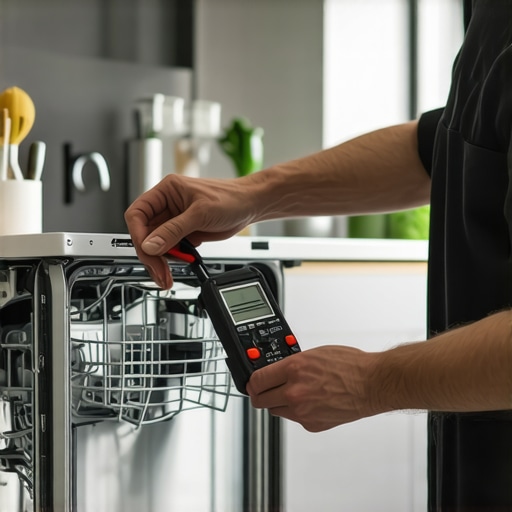
Set your multimeter to resistance (ohms). Disconnect the wires from the valve, then touch the probes to the terminals. A reading of approximately 300 ohms usually indicates a good coil; significantly higher or no reading suggests a faulty coil, warranting replacement. This step is akin to testing a fuse or relay in your car—quick but critical. If the coil tests bad, consider ordering a new valve from the diagnostics parts guide.
Replace or Repair the Valve
If the coil fails the test or visual inspection reveals damage, replace the valve. Unscrew the mounting bracket, swap the old for the new, and reconnect hoses and wiring carefully. Think of it like replacing a cartridge in a printer—precision and the right tool are key. Double-check all connections, then proceed to reassemble the panel.
Test Your Dishwasher
Reconnect power and water, then run a short cycle to confirm operation. Listen for unusual noises or leaks—if anything’s amiss, revisit your work or consult additional troubleshooting guides. Remember, patience and methodical steps save time and prevent further damage.
Doing this yourself can save significant repair costs. For more complex diagnostics or if issues persist, explore expert guides like our dishwasher diagnostics or consider professional assistance to ensure safety and proper repair.
,
The Hidden Nuance Behind Common Misconceptions
Many DIY enthusiasts and even some professionals operate under the assumption that diagnosing appliance issues is straightforward—primarily based on surface symptoms. However, this oversimplification can lead to costly errors and prolonged frustration. In reality, small nuances often determine the success of repairs, especially with complex systems like dishwashers and ovens. For example, the myth that a loud dishwasher always indicates a failing motor can be misleading; often, a worn-out spray arm bearing or misaligned pump impeller is the culprit. Recognizing these subtleties requires a deeper understanding of internal component interactions and diagnostic techniques.
Don’t Fall for the Myths of Quick Fixes and Basic Assumptions
A common trap is believing that all water leaks are caused by faulty door seals or gaskets. While these parts can be the source, sometimes leaks originate from loose or damaged water inlet valves or clogged filters. Rushing to replace gaskets without thorough inspection might temporarily fix the appearance but will not resolve the underlying issue. For a comprehensive approach, check our diagnostics guides to understand the root causes better. Additionally, many think that if an oven isn’t heating, the problem is always the heating element. Yet, issues often stem from faulty temperature sensors or control board glitches, which are trickier to diagnose without proper testing. Learning to differentiate these symptoms can save you from unnecessary replacements and repeated failures.
Can Advanced Diagnostics Really Save Time and Money?
Absolutely. Employing proper diagnostic tools—like multimeters and specialized testing procedures—allows you to accurately identify defective parts before pulling out a screwdriver. For instance, testing a dishwasher’s water inlet valve electrical coil with a multimeter can reveal whether the coil is burned out, eliminating guesswork. Similarly, understanding the significance of component resistance readings helps prevent blind replacements. This nuanced approach is supported by studies in appliance repair efficiency, highlighting that accurate diagnostics reduce repair time by up to 50% and minimize unnecessary part swaps (source). Mastering these advanced diagnostic techniques elevates your repair skills from amateur to expert, saving you money and ensuring long-term appliance health.
Have you ever fallen into this trap? Let me know in the comments. Remember, understanding the intricate details and avoiding common misconceptions is key to becoming a true appliance repair pro.
Essential Tools for Effective Appliance Maintenance
When it comes to maintaining your dishwasher and oven, having the right tools can make all the difference. I personally rely on a high-quality digital multimeter because it provides quick, accurate readings of electrical components. This helps me identify faulty coils or blown fuses without guesswork. Additionally, a set of precision screwdrivers with magnetic tips ensures I won’t lose tiny screws when removing panels or accessing internal parts. For diagnosing water flow issues, I use a flexible inspection camera, which allows me to visualize hoses and impellers without disassembly. Investing in these specific tools has saved me countless hours and prevented unnecessary part replacements. Looking ahead, I predict the trend will shift toward smart diagnostic devices that connect directly to appliances via Wi-Fi, providing real-time data and troubleshooting tips—streamlining maintenance even further.
What are the best practices to keep your appliances operating long-term?
Regular maintenance is key. I recommend scheduling a monthly inspection of visible parts, cleaning filters, and checking for corrosion or leaks. When cleaning filters, avoid harsh chemicals; instead, use a gentle brush and warm soapy water to remove debris. As for electrical components, periodically test coils and switches with your multimeter to catch issues early. For example, testing the water inlet valve coil can reveal shorts or burnouts before they cause water flow problems, as detailed in our comprehensive repair guide. Moreover, ensure that door seals are intact and free of debris to prevent leaks, which prolongs the lifespan of your appliances. Incorporating these routine checks can significantly reduce breakdowns and repair costs over time.
Why are diagnostic techniques crucial for DIY repairs?
Advanced diagnostic methods enable you to pinpoint issues swiftly and accurately. For instance, using a multimeter to test electrical coils ensures that you’re replacing only faulty parts, saving both time and money. I recommend performing resistance tests on water inlet valve coils: a reading around 300 ohms usually indicates good condition. Any deviations suggest a coil failure that needs replacement. Employing these detailed checks aligns with industry best practices and is supported by expert advice from our diagnostics resource center. By mastering these techniques, you’ll reduce guesswork and improve repair success rates. I challenge you to test your dishwasher’s inlet valve coil today and see how confirming component health prevents unnecessary part swaps.
Three Surprising Twists That Changed My Repair Game
One of the biggest realizations I had was that not every leak or noise originates from the most obvious culprit. Sometimes, a minor worn gasket or a clogged filter can be the hidden cause, which makes a quick visual inspection invaluable. Another lesson was understanding that diagramming electrical connections before disconnecting wires saved me hours of guessing later. Lastly, I discovered that patience during diagnostics, instead of rushing to replace parts, often led to discovering simple fixes—saving both time and money. These personal insights transformed my approach from trial-and-error to precision troubleshooting, and they could do the same for you.
Tools and Resources That Turn Complexity Into Confidence
My most trusted tools include a high-quality digital multimeter, which I rely on for accurate readings of coils and switches, ensuring I replace only what’s truly faulty. A set of magnetic-tip screwdrivers helps me access tight spaces without losing tiny screws. For deeper insight, the comprehensive repair guide offers step-by-step diagnostics tailored to common issues. Additionally, subscribing to expert troubleshooting blogs and communities keeps me updated on emerging repair techniques, making me more efficient and confident with every fix.
Keep the Momentum and Empower Your Repairs
Every repair you undertake increases your skill and confidence. Trust me, the more you learn and apply diagnostics techniques, the less intimidating appliance issues become. Today, I challenge you to test your dishwasher’s water inlet valve coil—use your multimeter, follow the guidelines, and see how pinpointing the fault can prevent unnecessary part replacements. Remember, mastering these repairs isn’t just about fixing appliances; it’s about building a resilient, self-reliant mindset that turns frustration into mastery. Your appliances—and your wallet—will thank you for it.