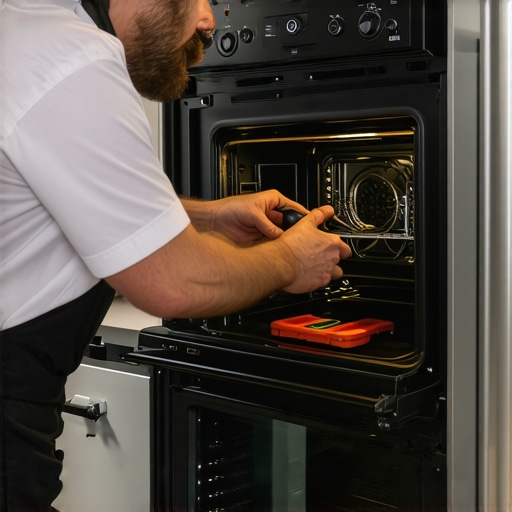
Ever been halfway through dinner prep only to hear that dreaded clicking sound from your oven, or worse, no heat at all? I’ve been there—frustrated, scratching my head, wondering what I missed. It’s a sinking feeling when your kitchen’s heart stops working, especially when you’re counting on it to make a meal perfect. But here’s the thing: I’ve discovered that most oven issues follow patterns. With the right diagnostic tips, I can usually pinpoint the problem faster than calling in a pro—and save some serious cash in the process.
Why Diagnosing Your Oven Faster Matters More Than Ever
In 2025, appliance repair has become more accessible, and the key is knowing what to check first. Why? Because the faster you identify the issue, the sooner you can get back to cooking or at least avoid the inconvenience of a cold kitchen. Plus, with new smart features and complex parts, understanding the basics of diagnostics is a real game-changer. It’s like having a secret weapon in your toolbox, ready to tackle common problems without waiting for a technician.
Early on, I made the mistake of assuming every problem was a big, expensive fix. Turns out, many issues stem from simple parts like thermostats or igniters—parts I could test and replace myself. If you want to avoid those costly service calls and get your oven running faster, I recommend checking out effective repair strategies for 2025. They’ve helped me and many others cut down repair times significantly.
Is Relying on Diagnostics Actually Worth the Hype?
Look, I get it—diagnostics can sound intimidating. I used to think, “Will I really figure this out, or just make it worse?” The truth is, if you avoid common mistakes—like skipping the power check or ignoring obvious signs—you can actually troubleshoot effectively. I once replaced a heating element without testing the thermostat first. Big mistake. That wasted time and money made me realize the importance of a proper diagnostic approach. For step-by-step guidance, check out the complete troubleshooting guide for 2025.
Today, I want to share with you the core strategies that have helped me cut down repair times and avoid unnecessary replacements. Whether you’re a seasoned DIYer or just getting started, mastering these diagnostic tactics will transform your approach to oven repairs. Ready? Let’s dive into the practical steps that will make your next fix faster, smarter, and less stressful.
Test the Power Supply Immediately
Before diving into complex parts, ensure your oven is receiving power. Think of this as checking if your car has fuel—simple yet crucial. Plug in the oven, toggle the circuit breaker, and look for indicator lights or displays. If nothing lights up, the issue isn’t the oven but the power source. Use a multimeter or a voltage tester to confirm current flow, and if you’re unsure, consult a simple guide like effective repair strategies for 2025.
Inspect the Heating Elements and Igniters
Once power is confirmed, the next step is examining the heating elements or igniters—these are the oven’s way of producing heat. If they look broken or burnt out, replace them. I once had an oven that refused to heat; a quick visual check revealed a cracked bake element. Swapping it out was straightforward, and my oven was back in action. For detailed guidance, see the complete troubleshooting guide for 2025.
Check the Thermostat and Temperature Sensors
Think of the thermostat as your oven’s brain—if it’s faulty, your oven might turn on but not heat correctly. Use a multimeter to test resistance; a significantly different reading from the specs indicates a defective part. I replaced a malfunctioning thermostat that was giving inconsistent temperatures, saving myself from wasted food. For precise testing procedures, visit top diagnostics parts for effective oven repair in 2025.
Test the Control Board and Wiring
If power, elements, and sensors check out, the control board might be the culprit—think of it as the oven’s command center. Visually inspect for burnt or damaged circuit boards or loose wires. Use a multimeter to check continuity in wiring harnesses. I once found a loose wire that was causing intermittent heating; tightening it fixed the issue instantly. For troubleshooting tips, see essential parts for faster fixes in 2025.
Use Diagnostic Mode for Smart Ovens
If you own a smart oven, consult the user manual for diagnostic modes. These built-in tests can pinpoint issues without opening panels. Think of it as a health check-up in your device—quick and revealing. I used this feature on my smart oven, and it immediately indicated a faulty temperature sensor, saving me hours of guesswork. For more on smart diagnostics, visit ultimate oven diagnostic guide for 2025.
Keep a Troubleshooting Log
Document each step, what you tested, and the results. It’s like keeping a repair diary—helps avoid repeating steps and speeds up future fixes. I once kept a log that showed my oven’s control board was fine, but the wiring was loose. This record turned a messy repair into a quick fix. For tips on organizing diagnostics, check diagnostics parts for efficient oven repair in 2025.
Many DIY enthusiasts and even seasoned pros fall into common traps when diagnosing and fixing dishwashers, ovens, or other appliances. Let’s dig deeper into what most people get wrong and how to avoid those pitfalls that can turn a simple repair into a costly mistake.
Why the Popular Belief That All Parts Are Interchangeable Is a Trap
One widespread misconception is that all replacement parts are universal or interchangeable between models. In reality, appliance components are highly specific; a part designed for one oven or dishwasher might not fit or function correctly in another. Relying on generic parts can lead to further damage or unreliable operation. To ensure compatibility, always double-check part numbers and consult manufacturer diagrams or trusted repair guides like these expert diagnostics guides. Understanding the nuances of part specifications saves time and money.
Beware the Oversimplification of Diagnostic Processes
Many believe that a quick visual inspection and a multimeter test are enough to pinpoint the issue. While these are essential steps, they can be misleading if not done systematically. For example, a burnt-out heating element might seem obvious, but if the control board or wiring is faulty, replacing the element alone won’t solve the problem. The real trick is to follow a layered diagnostic approach—testing power, wiring, sensors, and control units in sequence. This layered troubleshooting is covered extensively in comprehensive diagnostic guides.
Common Myth: Resetting the Appliance Fixes Everything
Another myth is that simply unplugging and plugging back in a device will resolve persistent issues. While sometimes a reset can clear temporary glitches, many faults are rooted in hardware failure or miscommunication between parts. Relying solely on resets delays proper diagnosis and can cause frustration. Instead, use resets as a preliminary step, then proceed with targeted testing, especially looking into control boards and sensors, which are often overlooked in basic troubleshooting. For advanced tips, see these effective fix strategies.
Are You Falling Into the ‘Assumption Trap’? Knowing When to Call a Pro
Even with the best diagnostics, some problems are complex enough that DIY repair isn’t practical or safe—especially when dealing with high-voltage parts or sealed systems. The key is to recognize when your diagnostic efforts hit a dead-end. If you’re repeatedly replacing parts that don’t solve the problem, or if the appliance still behaves unpredictably, it’s time to consult a professional. This prevents further damage and ensures safety. Remember, understanding advanced diagnostics on your own is great, but knowing your limits is equally important. For sophisticated troubleshooting, check out the ultimate repair guide.
Have you ever fallen into this trap? Let me know in the comments and share your experiences so others can learn from your mistakes!
Invest in Quality Diagnostic Tools for Peace of Mind
When it comes to maintaining your appliances, having the right diagnostic tools can make all the difference. I personally swear by a high-quality digital multimeter, which allows me to test electrical components with precision. For instance, checking the resistance of sensors or the continuity of wiring harnesses becomes effortless with a reliable multimeter. I prefer models with auto-ranging features, like the Fluke 117, because they reduce guesswork and speed up diagnostics. Additionally, a thermal camera can be invaluable for spotting heat inconsistencies in heating elements or control boards—saving me hours of troubleshooting. As appliance technology advances, I predict that diagnostic tools will become even smarter, perhaps integrating AI to interpret readings in real-time, making DIY repairs more accessible for everyone.
Keep Your Parts Fresh and Compatible
Using OEM (Original Equipment Manufacturer) parts is non-negotiable if you want long-term reliability. I always double-check part numbers against manufacturer schematics before ordering replacements. For example, when replacing an oven thermostat, I consult the official diagrams via trusted guides like this comprehensive repair guide to ensure compatibility. A tip I’ve learned over the years is to keep spare parts organized in labeled bins—this way, I can quickly access the right component without wasting time guessing or ordering last-minute. This habit has significantly accelerated my repair process and reduced errors.
Regular Maintenance for Consistent Performance
Preventative maintenance is the secret to keeping your appliances running smoothly. For dishwashers, I regularly check and clean the spray arms and filters, which prevents clogs that could strain the motor. In ovens, I inspect door seals and clean vents to ensure proper heat circulation. Scheduling a bi-annual inspection of wiring and sensors, especially in smart appliances, helps catch potential issues early. As technology evolves, I believe that IoT-enabled diagnostics will notify us proactively about wear and tear, allowing for even better long-term planning.
How do I maintain appliance diagnostics over time?
Staying on top of diagnostics involves a combination of regular cleaning, updates, and calibration of your testing tools. For digital multimeters, I periodically verify their accuracy using known resistors or voltage sources. Firmware updates for smart appliances are equally important—they often include bug fixes and performance improvements that enhance diagnostic accuracy. Moreover, keeping a detailed repair log helps identify recurring issues, so I can address underlying problems before they become serious. Embracing these habits ensures your appliances stay in top shape and reduces the likelihood of costly breakdowns. For detailed maintenance routines, visit effective repair strategies for 2025 and stay ahead of appliance issues.
Try integrating a thermal camera into your diagnostic toolkit—it’s a game-changer that can reveal hidden heat anomalies not visible to the naked eye. This small investment can save you time and money by catching issues early, especially in complex control boards or heating elements. Keep your tools calibrated and your parts organized, and you’ll be surprised at how much easier appliance repairs become over time.
Lessons That Changed My Approach to Oven Troubleshooting
One of the most valuable lessons I learned was to always start with the simplest checks—like power supply—before diving into complex parts. It saved me hours of unnecessary work and frustration. Another insight was realizing that many issues stem from specific, often overlooked components like thermostats or wiring, not just the heating element itself. Lastly, I discovered that investing in quality diagnostic tools, such as a reliable multimeter or thermal camera, dramatically improves my ability to pinpoint problems quickly and accurately, transforming the way I approach oven repairs.
Tools and Resources That Made a Difference
Over time, I found certain tools indispensable. My top choice is the Fluke 117 multimeter because of its precision and ease of use, especially for testing sensors and wiring. I also trust the comprehensive guides found at these diagnostic guides which have helped me avoid costly mistakes. Finally, a good thermal camera, like the FLIR ONE, has been a game-changer for visually detecting heat issues without dismantling the oven, saving me time and guesswork.
Ignite Your Confidence and Tackle Repairs Head-On
Remember, diagnosing oven problems doesn’t have to be intimidating. With the right knowledge, tools, and a methodical approach, you can become more self-reliant and save money. Each successful repair boosts your confidence and turns you into a problem-solving pro. So, don’t hold back—start experimenting with diagnostics today and take control of your appliances. The future of appliance repair is in your hands, and every fix brings you closer to mastering this essential skill.
What has been your biggest breakthrough when troubleshooting your oven? Share your story below and let’s learn from each other’s experiences!
Marcus Reed
Reading through this post reminded me of a time I faced a stubborn oven that refused to heat, and how I initially underestimated the importance of proper diagnostics. Starting with the power check saved me hours because I almost replaced the heating element without verifying if there was electricity reaching it. I also learned that inspecting the wiring and control board can often reveal hidden issues, like loose wires or burnt circuitry, that can be fixed without replacing expensive parts. I now make it a point to keep a detailed repair log which has helped me recognize recurring problems over time, saving me money and headaches. My question for others is, how do you prioritize diagnostic steps when troubleshooting complex appliances? Do you find that a certain sequence works better for you, or do you take a different approach depending on the symptoms? I believe that understanding and organizing diagnostic processes can turn a frustrating repair into a straightforward task.
Sara Mitchell
This post really hits home for me, especially with how many times I’ve rushed to swap out parts like heating elements or thermostats without proper diagnostics. I’ve learned that starting with the basics—like ensuring the oven is getting power—is crucial and saves so much time and money. I’m curious, for those of us who are more DIY-oriented, what diagnostic tools have you found most effective? I recently invested in a thermal camera, and it’s been a game-changer for spot-checking heat in heating elements and circuit boards, catching problems before they become more serious.
The layered troubleshooting approach mentioned here is something I’ve adopted gradually, and it really makes the process less overwhelming. Has anyone encountered a particularly tricky issue where following a structured diagnostic flow prevented a full part replacement? It’s fascinating how understanding the system as a whole leads to smarter repairs, especially with complex smart ovens now adding extra layers of troubleshooting. Would love to hear more success stories or tips from fellow DIYers on how they keep their diagnostic process organized and efficient.