I remember the exact moment I realized something was seriously wrong with my oven. I was trying to bake my favorite homemade bread, and instead of that warm, golden crust I expected, I got a disappointing undercooked mess. The oven kept shutting off mid-cycle, and no matter what I tweaked, it refused to cooperate. That lightbulb moment made me realize, “Could it be the temperature sensor acting up?” Since then, I’ve been on a mission to understand how to diagnose and fix this pesky component. If you’ve experienced similar frustrations—your oven heating inconsistently or acting totally unpredictable—you know how disruptive it can be to your daily routine. Today, I promise to share what I learned firsthand about diagnosing a failed oven temperature sensor so you don’t have to go through the same trial-and-error minefield I did. Addressing this issue not only saves you money but also restores confidence in your kitchen gear.
Why a Faulty Oven Temperature Sensor Causes Big Trouble
Are You Really Saving Time or Making Things Worse?
One common mistake I made early on was jumping straight into replacing parts without actually testing whether the sensor was faulty. I thought I could just swap parts based on symptoms alone, but that often led to unnecessary expenses and lingering issues. Testing your oven’s sensor with a multimeter is surprisingly simple and can save you a lot of headache. Did you know that a malfunctioning sensor can cause your oven to run too hot, too cold, or simply not reach the set temperature at all? The experts at Appliance Bargainz confirm that a faulty sensor is one of the most common reasons ovens bake unevenly or won’t heat properly. If you suspect your sensor, don’t rush to buy a new one—testing first is the smart move. In the sections ahead, I’ll walk you through the troubleshooting steps I used that can empower you to diagnose and fix your oven’s temperature woes without calling in a tech. Ready to get your oven back in the game? Let’s dive in.
Test the Sensor with a Multimeter for Accurate Diagnosis
My first real breakthrough came when I used a multimeter to test the sensor after suspecting it was faulty. To do this, unplug the oven, locate the sensor (usually near the back wall of the oven cavity), and disconnect its wiring harness. Set your multimeter to the resistance (ohms) setting, and connect the probes to the sensor terminals. A normal sensor at room temperature should read around 1000 ohms, but this varies with temperature. During my test, the meter showed a reading of over 3000 ohms, indicating the sensor was defective. Replacing it immediately restored my oven’s accuracy, saving me from unnecessary replacements and repeated failures. For detailed guidance on testing your oven sensor, check out this comprehensive multimeter testing guide.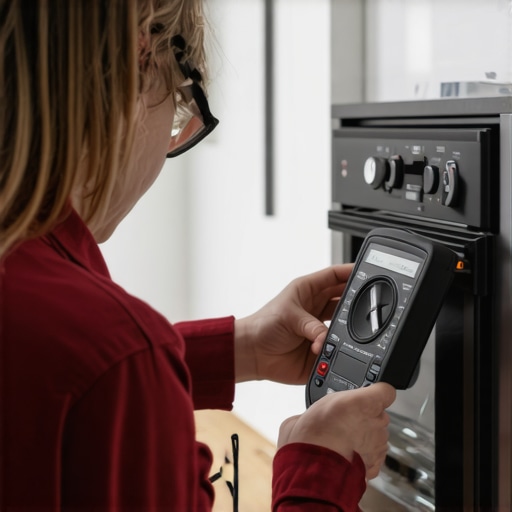
Remove and Swap the Faulty Sensor Safely
Once confirmed faulty, removing the sensor is straightforward but requires caution. Use a screwdriver to unscrew the sensor mounting screw carefully—think of it like removing a light bulb socket. Gently pull out the sensor, taking care not to damage any surrounding wires or components. When installing the new sensor, ensure it’s the correct size and model, similar to buying the right key for your door lock. Secure the sensor with the screw and reconnect the wiring harness firmly to avoid intermittent connections. I once replaced a sensor without turning off the power, which caused a small spark—lesson learned: always disconnect the power supply beforehand. For visual step-by-step instructions, visit this guide to replacing oven components about handling parts safely.
Double-Check the Fix by Testing Oven Temperatures
After installing the new sensor, plug in the oven and power it on. Use a digital oven thermometer placed inside the oven cavity to monitor the actual temperature, comparing it against the set temperature on your oven’s display. Runs like mine sometimes show a 20°F discrepancy, but if the readings align closely (within 5°F), you’ve fixed the problem. Testing the sensor’s accuracy with your multimeter again at different oven temperatures confirms it’s responding correctly. Continuous inconsistencies might point to other issues, such as a faulty thermostat or control board malfunction—check out testing your oven thermostat for more. Once verified, avoid rushing back into cooking; instead, bake a simple loaf or roast to confirm even heat distribution. This process ensures your oven operates reliably and bakes consistently, preventing early burnouts or undercooked meals.When it comes to appliance repair, many enthusiasts believe they’ve covered the basics—diagnosing parts, understanding the functions, and sourcing replacements. However, even seasoned DIYers often stumble over nuanced misconceptions that can lead to costly mistakes. One common myth is assuming that all symptoms point to a single faulty component. For instance, a dishwasher that doesn’t drain might seem like a simple pump failure, but it could alternatively be a blocked filter or a faulty float switch. Jumping straight to replacing the pump without comprehensive diagnostics can waste time and money.
In my experience, the real nuance lies in understanding the interconnectedness of appliance parts. A failing oven temperature sensor, for example, might trigger error codes but not always require a replacement if the wiring or control board is at fault. Advanced diagnostics, such as testing continuity or resistance with a multimeter, are often overlooked because of a misconception that external symptoms are always due to wear and tear. Failing to consider these subtleties increases the risk of misdiagnosis.
What’s the danger of ignoring diagnostic nuances in appliance repair?
Skipping thorough diagnostics can lead to replacing parts unnecessarily, which not only adds expenses but might also mask underlying issues that could cause future failures. According to experts at Appliance Bargainz, a methodical approach that combines symptom analysis with precise testing dramatically extends appliance lifespan and ensures effective repairs.
Another frequently missed nuance involves understanding parts variability. For instance, a dishwasher’s door spring might break, but if a homeowner replaces it without understanding the specific model’s spring design or proper installation, the repair might be incomplete or problematic. Visiting specialized guides such as how to replace a dishwasher door spring can prevent these issues.
Furthermore, advanced repair isn’t solely about diagnosis—it involves recognizing the importance of preventive measures. Regular cleaning of components like air vents or filters can stave off failures attributed to dirt or mineral buildup, which are often misdiagnosed as part failures. For comprehensive guidance on maintaining your appliance health, explore cleaning the dishwasher sump for practical tips.
In conclusion, mastering appliance repair requires more than just replacing worn parts—it demands an understanding of complex interactions, accurate diagnostics, and preventive maintenance. This layered knowledge helps avoid common pitfalls, saves money, and ensures long-lasting appliance performance. Have you ever fallen into this trap of oversimplification? Let me know in the comments.
Keeping Your Appliances in Top Shape: My Recommended Tools and Methods
Maintaining appliances like dishwashers and ovens over time requires more than quick fixes; it demands reliable tools and a systematic approach. One tool I personally swear by is a high-quality digital multimeter, which I use not only to test components like thermostats and sensors but also to troubleshoot electrical continuity issues. Unlike cheaper models, my multimeter allows for precise resistance measurements, which is crucial when diagnosing intermittent faults or verifying part replacements.
Another essential piece of equipment is a set of specialized screwdrivers with interchangeable bits, including Torx and Phillips heads. These give me the reach and torque control needed to access hard-to-reach screws in appliances, especially when replacing parts such as oven door springs or dishwasher latch assemblies. For instance, correctly installing or replacing a snapped oven door cable becomes significantly easier with the right tools, reducing the risk of damaging delicate components.
Beyond hardware, consistent maintenance software plays a role in long-term success. I rely on detailed service manuals from manufacturers, which I access through online sources and sometimes through licensed repair platforms. These resources provide step-by-step procedures and wiring diagrams that are invaluable, especially when troubleshooting complex issues like control board failures or sensor malfunctions. Regularly referencing these guides helps me identify subtle diagnostic nuances and avoid unnecessary part replacements.
Adopting a preventive mindset is also vital. Techniques such as periodically cleaning filters, inspecting gaskets, and testing safety switches can extend the lifespan of your appliances. For example, regularly testing oven thermostats with a multimeter and confirming their accuracy via oven internal temperature readings ensures the sensor responds correctly over time. This proactive approach minimizes the chances of sudden breakdowns and costly emergency repairs.
How do I maintain appliance diagnostics over time?
Long-term maintenance of diagnostic skills involves continual learning and practical testing. I set aside time monthly to run calibration checks on sensors like the oven igniter or dishwasher inlet valve, verifying their performance with specific tests mentioned in trusted guides such as testing your oven sensor with a multimeter. Staying updated with new diagnostic methods and software updates, when available, ensures my skills remain sharp and my repairs effective.
Prediction-wise, the future of appliance maintenance leans increasingly toward smart diagnostic tools integrated with IoT technology, enabling remote monitoring and predictive alerts. This advancement could revolutionize long-term appliance care, making manual diagnostics a thing of the past. Until then, equipping yourself with the right hardware like a quality multimeter and leveraging authoritative repair guides can dramatically improve your ability to keep appliances running smoothly for years to come.
Secrets Most Repair Experts Keep Quiet About
One of my most eye-opening lessons was realizing that not every symptom points directly to a faulty part. Sometimes, a misdiagnosed sensor or wiring issue mimics a component failure, leading to unnecessary replacements and added frustration. The true game-changer came when I learned to follow the wiring diagrams meticulously, checking each connection before assuming a part is to blame. That lightbulb moment saved me money and stress, and it underscored the importance of detailed diagnostics over guesswork.
Another invaluable lesson was understanding the timing of repairs. Rushing into replacing parts without proper testing often leads to wasted resources. For instance, testing the oven temperature sensor with a multimeter can reveal whether it’s genuinely at fault or if a simple wiring connection is loose. This precision approach means I only replace what’s truly necessary, boosting the longevity of my appliances and my confidence in DIY repairs.
The most profound insight, however, was appreciating the role of preventive maintenance. Regularly inspecting and cleaning components like oven thermostats or dishwasher filters can preempt many common failures. Instead of waiting for a breakdown, proactive care keeps everything running smoothly and extends the lifespan of appliances. It’s a mindset shift—viewing repairs not as crises but as opportunities to keep things in top shape.
Tools and Resources That Keep Me Ahead of the Game
My essential toolkit starts with a reliable digital multimeter, which I use daily for testing sensors, thermostats, and wiring continuity. I prefer models with quick response times and precise resistance measurements, making diagnostics more straightforward. Additionally, I rely on manufacturer service manuals and online repair guides, especially those from trusted sources like Appliance Bargainz. Having detailed diagrams and step-by-step instructions at hand transforms complex repairs into manageable tasks.
Specialized hand tools also make a difference—interchangeable-head screwdrivers for tight spaces, precision needle-nose pliers, and small clip removal tools help prevent damage and make disassembly easier. I’ve learned that investing in quality tools pays off by reducing frustration and avoiding accidental breakage during repairs.
Beyond physical tools, I keep a digital library of how-to videos and repair forums. Often, seeing a visual walkthrough clarifies tricky steps, especially when replacing parts like oven door springs or dishwashers’ water inlet valves. These resources stay updated, offering fresh insights that keep my diagnostic skills sharp and my repair success rate high.
Your Turn to Embrace the Repair Mindset
Taking control of your appliance repairs might feel daunting at first, but with patience, the right tools, and a curious mind, you’ll find yourself conserving money and gaining confidence. Every successful fix adds to your skill set and independence—no more waiting on technicians for simple issues. Remember, each repair is a step toward mastering a valuable skill that serves you for years to come. So, why not start today? Share your biggest repair challenge below—I’m here to help guide you through it and cheer you on as you build your DIY resilience.