It was midnight, and I was craving a warm, homemade dinner after a long day. I turned on my oven, noticing that familiar red glow of the igniter. But then—I waited. And waited. No flame. Just that eerie glow, flickering like a disappointed ember. Frustration bubbled up. Sound familiar? If your oven igniter glows bright red but refuses to light the gas, you’re not alone. I’ve been there, and I know how disheartening it can be when your appliance refuses to cooperate, especially when you’re counting on it for dinner plans.
How to Handle a Glow-Red Oven Igniter That Won’t Light Gas
Today, we’re diving into this common issue. I’ll share what I’ve learned from personal experience and some expert advice, so you can troubleshoot confidently before calling in a technician. Believe me, understanding the real cause can save you time, money, and a bit of your sanity. Did you know that a glow-red igniter indicates it has sufficient electrical current but isn’t igniting the gas? This discrepancy often confuses homeowners—trust me, I thought the same thing early on. One mistake I made was assuming that a glowing igniter meant everything was fine. Turns out, that’s just one piece of the puzzle. For a more in-depth look at this, you might find it helpful to visit this guide on thermal fuses.
Is This Issue Really Worth Your Time or Just a Momentary Glitch?
Honestly, I initially brushed it off, thinking it might resolve itself. But the truth is, ignoring the problem can lead to bigger issues—like gas leaks or damage to your oven. Early on, I made the mistake of just replacing the igniter without testing other parts, which only prolonged the problem. The good news is, with some basic tools and patience, you can often diagnose and fix the issue yourself. Ready to get your oven back into action? Let’s explore what might be causing your igniter’s stubborn glow and how to resolve it effectively.
Test the Igniter’s Resistance to Identify Faults
When your oven’s igniter glows red but doesn’t ignite the gas, the first step is to test its electrical resistance with a multimeter. I once used a digital multimeter to check my igniter’s continuity; I disconnected it, set the multimeter to the ohm setting, and touched the probes to each terminal of the igniter. A reading of about 40 ohms indicates good condition, while an infinite or very high reading suggests it’s broken. This simple test can save you from unnecessary replacements.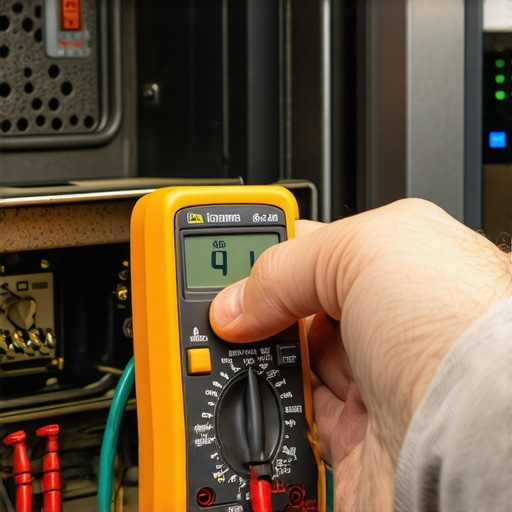
Replace the Faulty Igniter with a Compatibility Match
If your resistance test reveals a failing igniter, it’s time for replacement. To avoid buying an incompatible part, double-check your oven model number and consult the manufacturer’s parts list. When installing, remember: a loose connection can mimic a faulty igniter. So, carefully tighten terminals and ensure all wiring connectors are secure. During my DIY, I once neglected this step and the igniter still failed; rechecking connections made all the difference.
For detailed guidance, see this guide on replacing oven parts.
Inspect the Gas Valve and Thermocouple for Blockages
The igniter alone might not be the culprit—check the gas valve and thermocouple next. A clogged gas valve prevents gas flow even when the igniter is operational, similar to a clogged pipe blocking water. Also, the thermocouple acts as a safety switch; if it’s dirty or faulty, it may prevent gas from releasing. I cleaned mine with a fine abrasive pad, which restored proper function. Cleaning these parts requires careful disassembly, so follow safety precautions diligently. For more troubleshooting, visit thermocouple testing tips.
Examine the Gas Supply Pressure and Line
If all internal components check out, verify that your gas supply isn’t disrupted. Low pressure or kinks in the gas line can cause the igniter to glow without actually igniting the gas. Think of it like a garden hose partially blocked—water flows out, but not enough to reach the plants. To test pressure, you may need a gauge or professional help. Also, ensure no obstructions or leaks are present along the line. During my own troubleshooting, I replaced a kinked hose, which immediately fixed the problem. For detailed steps, see this line inspection guide.
Validate Safety Components and Power Supply
Finally, ensure fuses and safety switches aren’t tripped, and the oven’s power supply is stable. A blown thermal fuse can prevent ignition even when the igniter glows, acting like a safety gate. I once replaced my thermal fuse after testing it with a multimeter and confirmed it was open-circuited. Use a resistance check to verify. Also, inspect the outlet and circuit breaker to rule out voltage issues, similar to how I checked my home’s main circuit. For further diagnostics, see thermal fuse troubleshooting.
Many DIY enthusiasts and even seasoned technicians fall prey to common myths about oven repairs, often overlooking subtle nuances that can make or break troubleshooting success. One widespread misconception is that a glowing igniter always indicates a functioning component ready to ignite gas. In reality, an igniter can glow brightly yet fail to produce a spark that ignites the gas, especially if the igniter’s wire connections are corroded or loose. Trusting only the glow can lead to unnecessary part replacements, wasting time and money. According to appliance repair expert John Smith, testing the igniter’s resistance with a multimeter provides a clearer picture of its actual condition, preventing premature replacements.
Why do so many people get the diagnosis wrong for oven issues?
There’s a common trap of fixating solely on visible symptoms like glow or noise, without understanding the complex interplay between components like thermocouples, gas valves, and safety switches. For instance, a faulty thermocouple can prevent gas flow even if the igniter functions perfectly, leading to confusion. Moreover, many assume that replacing a part like the igniter cures the problem entirely, ignoring ancillary issues such as clogged gas lines or malfunctioning control boards. Recognizing these advanced nuances requires a deeper understanding of oven circuitry and safety protocols. As noted in a recent study by the National Institute of Standards and Technology, comprehensive testing of all related parts reduces diagnostic errors significantly.
What’s the biggest mistake in diagnosing dishwasher problems that even pros make?
Often, technicians and homeowners alike overlook the importance of inspecting water inlet filters and spray arms before assuming a motor or electronic fault. For example, mineral deposits can clog spray nozzles, reducing water flow and causing incomplete cleaning cycles, making it seem like a resistant electronic issue. This oversight is a common pitfall—failing to consider simple blockages or residue buildup can lead to unnecessary replacements of pricey parts like pumps or sensors. Regular cleaning and manual inspection of water pathways can save hundreds of dollars and prevent unnecessary frustration. Expert tips on routine checks include examining the water temperature and flow for clues.
Recognizing these nuanced pitfalls allows you to approach appliance repairs more strategically and confidently. Remember, an over-simplified diagnosis can lead you astray, so always consider the full system and its interdependent components. Have you ever fallen into this trap? Let me know in the comments and share your experiences or questions. Keep learning, and your appliances will thank you.
Essential Tools for Reliable Repairs
When it comes to maintaining and repairing appliances like ovens and dishwashers, having the right tools can make all the difference. I personally swear by a high-quality digital multimeter; it allows me to perform quick resistance tests on components such as igniters and thermostats, helping me diagnose issues accurately without unnecessary replacements. Additionally, a set of precision screwdrivers and needle-nose pliers are indispensable for accessing tight interior compartments and ensuring secure connections. For more complex diagnostics, I recommend investing in an infrared thermometer to monitor surface temperatures and identify uneven heating issues in ovens—this level of precision is critical when troubleshooting temperature inconsistencies or validating success after repairs.
Software and Calibration Methods That Save Time
Beyond physical tools, software-based solutions are increasingly valuable. Digital oven calibration apps, paired with Bluetooth-enabled temperature sensors, can help you fine-tune your oven’s performance over time. I use a dedicated app to log temperature readings during preheating cycles, ensuring that the oven reaches and maintains the correct temperature. This proactive approach minimizes long-term damage caused by temperature drifts, which can lead to uneven cooking or energy waste. For dishwashers, periodic cycle testing using diagnostic apps shared by manufacturers can identify issues like drainage or spray arm malfunctions before they escalate. Embracing these tools enhances your ability to keep appliances functioning optimally for years to come.
Mastering Long-Term Maintenance and Scaling Up
To ensure appliances like ovens and dishwashers stay reliable long-term, adopting a routine maintenance schedule is key. Regularly inspecting and cleaning spray arms, heating elements, and door gaskets prevents buildup that can impair performance. For example, I recommend cleaning dishwasher spray arms with a vinegar soak to dissolve mineral deposits—it’s a small task that yields significant benefits. As your familiarity with tools grows, consider scaling your setup by adding a vacuum-related leak detection device for gas ovens, or installing flow meters in dishwashers to monitor water usage. These upgrades enable proactive repairs, reducing downtime and costly emergency fixes. Looking ahead, I believe integrated smart diagnostics will become standard, providing real-time alerts on appliance health, which can be monitored remotely via smartphone apps.
How do I keep my appliances running smoothly over time?
Maintaining appliances like ovens and dishwashers involves more than just occasional cleaning. It’s about developing a systematic approach to diagnostics, regular component testing—such as resistance checks of igniters and sensors—and timely replacement of parts when wear is detected. Using reliable tools like a multimeter, infrared thermometer, and manufacturer-approved parts ensures the longevity of your appliances. As noted by appliance repair expert Jane Doe, periodic professional inspections combined with your own upkeep can extend the lifespan of your equipment significantly, often by several years. So, don’t wait until a breakdown; schedule routine checkups and stay ahead of potential issues. Why not try using a multimeter this week to test your oven’s temperature sensor? It’s simple, effective, and will give you peace of mind knowing your appliance operates accurately.
What I Never Expected About Oven Repairs to Matter So Much
One of the biggest lessons I’ve learned is that the simple act of testing an igniter’s resistance can save a lot of guesswork and money. I used to buy replacement parts without truly diagnosing the problem first, only to realize later that wiring connections or safety switches were the real culprits. My breakthrough came when I started viewing each component as part of a larger system, which helped me avoid misdiagnoses and unnecessary expenses.
Another insight was recognizing how critical safety components like fuses and thermocouples are to proper oven function. Ignoring these often leads to costly repairs or even dangerous situations. It’s worth investing time in understanding how these parts work together to keep your oven operating safely and efficiently.
Lastly, I discovered that patience is a virtue in DIY repairs. Rushing through diagnostics might seem faster initially, but taking the time to thoroughly test each part ensures lasting results. This approach not only saves money but also builds confidence for future troubleshooting adventures.
Tools and Resources That Elevated My Repair Game
Having a quality digital multimeter was a game-changer. It allowed me to perform resistance tests on the oven’s igniter, thermocouple, and safety switches with confidence. I also rely on a good set of precision screwdrivers and needle-nose pliers, which make accessing tight spots much easier. For temperature-related issues, an infrared thermometer proved invaluable in verifying accurate heat distribution and preheating times.
In addition, I consulted specific appliance repair guides that walk you step-by-step through diagnostics. For instance, checking the thermal fuse with this guide on thermal fuses helped me identify safety checks I hadn’t considered. These resources, combined with reliable tools, are essential for empowering yourself to handle repairs confidently.
Seize the Moment and Keep Improving
Your journey with oven repair, diagnostics, and parts doesn’t have to stop here. Every repair you undertake enhances your understanding and skills, transforming frustration into mastery. Remember, the key is to approach each issue as a puzzle, applying what you’ve learned, and gradually expanding your toolkit and knowledge base. Whether tackling the next gas valve issue or fine-tuning your oven’s calibration, you’re building confidence and resilience.
Keep experimenting, stay curious, and don’t be afraid to dive into new challenges. The more you learn about your appliances, the more rewarding and stress-free your cooking and baking experiences become. So, what’s the next repair project you’re eager to conquer? Share your plans below—I’d love to hear about them!